
Watermarks have been the first line of defense for content creators for a very long time, but anyone who’s spent quite some time in content protection knows how fragile these things can be.
A determined user with access to basic tools or a free AI model can remove a watermark in mere minutes. The real question isn’t whether to use watermarks but how to make them completely resistant to removal by combining various strategies with DRM controls.
Here’s how you can do just that while also keeping your content accessible to legitimate users.
KEY TAKEAWAYS
- DRM protects anyone from removing the watermark.
- Dynamic forensic watermarks change with every view, so it’s impossible to remove them without destroying the content itself.
- Invisible watermarks are another workaround for watermark attacks.
- AI is making the situation more difficult to handle.
The Relationship Between Watermarking and DRM
Watermarking and DRM serve different but complementary roles. A watermark is used to identify the content or its recipient, while DRM controls what a user can actually access in the file.
Used separately, it may still be vulnerable, but together, they create something far more difficult to defeat.
Limitations of Static Watermarks
A static watermark stays in the same position, set at exactly the same opacity, and on every copy of a document or video. This predictability is what leads to its downfall. Tools like Photoshop, GIMP, or even automated scripts can display the watermark’s pattern and delete it from the image.
In the video, frame averaging across multiple copies can isolate and remove the overlay entirely. Static watermarks are essentially a screen door on a vault: they signal ownership but do almost nothing to stop someone who actually wants in.
How DRM Acts as a Protective Layer
DRM changes the equation by controlling the environment where content is consumed. When a file is encrypted and can only be opened in an authorized player or viewer, the user never gets access to the raw, unprotected file.
That means there’s no clean copy to run through a watermark removal tool. DRM wraps the whole content in an encrypted container and dictates the playback rules, no downloading the decrypted stream, no exporting frames, and no accessing the underlying file structure.
The watermark remains intact as the user never touches the layer it lives on.
Implementing Dynamic Forensic Watermarking
Static watermarks fail because they’re predictable. Dynamic forensic watermarks solve this by being unique to each viewing session, making them nearly impossible to remove without destroying the content itself.
Real-Time User Data Injection
Forensic watermarking embeds user-specific information: account IDs, IP addresses, timestamps, or device fingerprints, making all of it flow into the content stream at the moment of playback.
If a leaked copy does surface, you can trace it back to the exact user session that produced the leak.
This isn’t theoretical. Major studios and enterprise publishers use session-based watermarking in 2026 to identify leakers within hours of a breach. The watermark data is different for every viewer, so there’s no single pattern an attacker can learn and remove.
Invisible Watermarking Techniques
Visible watermarks are easy targets because, well, you can see them. Invisible watermarks encode data into the content’s frequency domain or pixel structure in ways imperceptible to the human eye. These marks survive compression, resizing, and even re-recording from a screen.
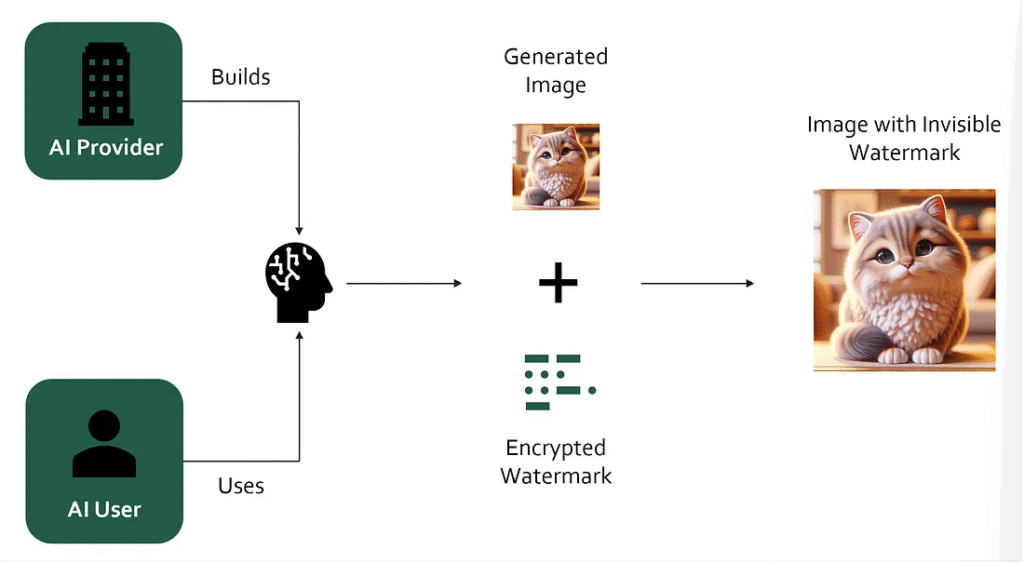
Some implementations spread the signal of the watermark across the entire frame or page, so cropping a part of the content still makes the copy retain enough data for proper identification.
Pairing invisible watermarks with DRM-controlled playback means that the user cannot access the raw file to analyze where the watermark resides.
DRM Controls to Prevent Unauthorized Editing
Preventing watermark removal isn’t just about making better watermarks. It’s about removing the tools and access paths someone would use to tamper with them.
Restricting Screen Recording and Captures
Modern DRM clients actively block screen capture software and recording tools. On desktop, this means detecting and disabling applications like OBS, Snagit, or the operating system’s built-in screenshot functions during playback. On mobile, DRM-protected content triggers secure playback flags that black out the screen in recordings. No system is perfect here: someone can always point a camera at a screen. But DRM raises the effort and reduces the quality of any captured copy significantly, which is often enough to deter casual piracy.
Hardware-Based Decryption and Playback
Hardware-level DRM, like Widevine L1 or Apple FairPlay, performs decryption inside the device’s trusted execution environment. The decrypted content never goes through software layers where it could be intercepted.
This is why Netflix shows HD content only on devices with hardware DRM support. For document protection, similar principles apply: the file is decrypted only within the secure viewer, and the decrypted content is never written to disk. Without access to the unencrypted file, there’s nothing to edit and no watermark to remove.
Mitigating AI-Based Watermark Removal
AI tools capable of removing watermarks have become disturbingly good. Generative models and AI VFX tools can inpaint over visible marks, while deep learning algorithms can estimate and subtract watermark patterns, making watermark protection increasingly challenging. Your defense needs to account for this.
Moving and Randomized Watermark Placement
If the watermark appears in a different location, angle, or scale on every page or frame, AI removal tools struggle to do the job, as they rely on pattern consistency to locate what’s a watermark and what’s content.
Randomization breaks that assumption. Some systems shift the watermark position every few seconds during video playback or randomize placement across document pages, forcing any removal attempt to be manual and frame-by-frame.
Multi-Layered Pattern Obfuscation
Rather than a single watermark, advanced systems embed multiple overlapping patterns at different frequencies and in different color channels. Removing one layer still leaves others intact. This approach works especially well against AI models trained to detect specific watermark types: the variety of patterns overwhelms the model’s ability to cleanly separate watermark from content. Combined with DRM that prevents file export, these layered marks become practically permanent.
Best Practices for Multi-DRM Integration
The following are the best practices to follow to achieve multi-level DRM integration:
Choosing the Right DRM Provider
Not every DRM solution offers the same level of watermark protection. Look for providers that support forensic watermarking, hardware-backed decryption, and granular access controls.
For video, multi-DRM platforms supporting Widevine, FairPlay, and PlayReady cover the widest device range. For documents, you want a reliable provider that encrypts at the file level and controls viewing, printing, and copying independently.
Avoid solutions that rely solely on password protection: that’s not DRM, it’s a suggestion.
Monitoring and Revoking Access Keys
DRM is only as strong as your key management. Monitor access logs for suspicious patterns: bulk downloads, access from unexpected regions, or repeated playback on newer devices.
When a breach is identified, the ability to revoke decryption keys remotely and instantly is very important. This essential kills access to the content without needing to recall files or alter watermarks.
Pair this with forensic watermark tracing, and you can identify the source of a leak and shut it down in real time.
Future Trends in Content Security
The arms race between content protection and circumvention isn’t slowing down. AI-powered watermark removal will keep improving, but so will detection. Expect to see wider adoption of blockchain-based content registries that provide tamper-proof ownership records alongside DRM.
Edge computing enables more sophisticated real-time watermarking without latency problems. The most important change, though, is philosophical: organizations are transitioning from “prevent all copying” to “make every copy traceable”.
This mindset combines DRM access controls with forensic watermarking, making it the most practical defense available in 2026.
Protecting What Matters Most
Preventing watermark deletion requires a lot more than just a better watermark. It demands a layered strategy: DRM encryption to lock down the file, dynamic forensic watermarks to identify leaks, hardware-backed playback to block interception, and consistent monitoring to catch breaches at early stages.
No single technology solves the problem entirely, but the right combination makes unauthorized use impractical and traceable.
If you’re looking for a proven solution to protect documents from unauthorized access, copying, and redistribution, Locklizard offers DRM-based document security that combines encryption, watermarking, and granular use controls in a single platform.
FAQs
1. How to prevent watermarks from being removed?
Ans: The best practice around watermarking is to make it big enough with many lines and features that it’s difficult to remove.
2. How to protect video with DRM?
Ans: You’ll need a DRM software like Mux to create a DRM-protected asset or live stream.
Ans: Watermarks signify the content being protected, while DRM controls its access and sharing.
3. What is the difference between DRM and watermarking?