The IRS decides the federal mileage rate every year to deduct the driving costs of a personal vehicle when it is used for business. So, it’s important to understand the current mileage reimbursement rate to reduce your federal income tax.
As an employee or employer, you should also stay updated with this policy to avoid penalties. To help you, I’ve compiled detailed information on the mileage rate, calculations, the previous year’s rate, examples, covered expenses, and advantages.
So, stay adherent to this article!
Key Takeaways:
- The federal mileage rate is 72.5 cents per mile when the vehicle is used for business, medical, or charitable purposes.
- The IRS mileage rate covers all expenses, such as gas, fuel, insurance, depreciation, miles, and other costs.
- It helps individuals, the self-employed, and employees to deduct vehicle expenses from their federal income tax.
What is the Federal Mileage Rate?

The federal mileage rate is the amount of money that an employee should deduct from their federal income tax for using a personal vehicle for charity, medical, moving, and business purposes.
In the United States, the Internal Revenue Service (IRS) sets the standard mileage rate every year to keep up with inflation and track every single expense of a personal vehicle. It also helps people and businesses to claim tax deductions without collecting receipts and making complex calculations.
It covers vehicle expenses, such as the following:
- Fuel
- Maintenance
- Licensing
- Insurance and more
So, next time you file your federal income tax, never forget to claim your mileage tax deductions.
What is the Current Federal Mileage Rate in 2026?
According to the Internal Revenue Service (IRS), the standard mileage rate is 72.5 cents per mile for business use in 2026.
As of January 1, 2026, the current federal mileage rate for your car, van, or pickup or travel truck is the following:
- Business Use: 72.5 cents per mile
- Medical Use: 20.5 cents per mile
- Moving Purposes: 20.5 cents per mile for certain duties of the Armed Forces.
- Charitable Organizations: 14 cents per mile
This rate applies to all fully electric vehicles, hybrid automobiles, gasoline, and diesel-powered vehicles.
What was the Federal Mileage Rate in 2025?
For 2025, the Internal Revenue Service (IRS) sets the federal mileage rate at 70 cents per mile for business use.
Let’s take a look at other standard mileage rates to compare prices in 2026.
- Business Use: 70 cents per mile
- Medical Use: 21 cents per mile
- Moving Purposes: 21 cents per mile
- Charitable Organizations: 14 cents per mile
So, comparing the 2025 current mileage reimbursement rate with the 2026 rate helps you to plan your budget accordingly.
How is the Current Mileage Reimbursement Rate Calculated?
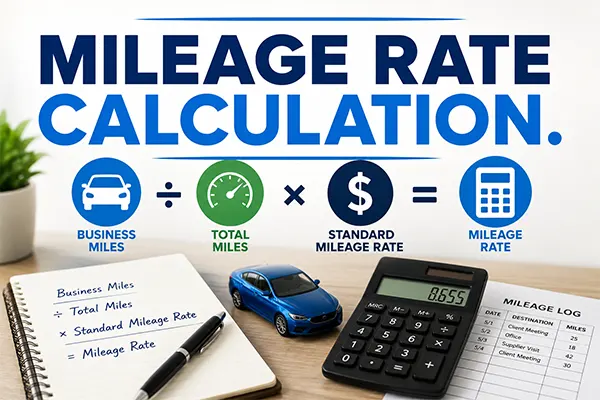
Here is a simple example to learn how to calculate the mileage reimbursement rate. So, read thoroughly!
For example, Garrot uses his own van to deliver the raw material to his factory for making creamy ice creams. The distance traveled was 16 miles and 3 rounds per year.
Total miles = 16 x 3 rounds = 48 miles
Current Mileage Reimbursement Rate = 48 miles x 72.5 cents ($0.725) = $34.80.
$34.80 is the total deduction that will be tax-free from his income tax.
Important Note: It’s not compulsory to follow the standard mileage rate. You can also calculate your exact vehicle expense and use other rules and regulations when you switch.
What Does the Current Federal Mileage Rate Cover?
The current mileage rate covers both fixed and variable costs. I’ve listed the detailed examples in the following section.
Fixed expenses include:
- Insurance
- Registration
- Lease agreement
- Depreciation
- Taxes
Variable expenses include:
- Fuel
- Oil
- Tire wear
- Maintenance
- Repairs
What is Not Included in the IRS Federal Mileage Rate?
The federal mileage rate doesn’t include the following expenses:
- Parking costs
- Toll fees
- Personal vehicle use
- Company car use
- Fines and violations
- Interest on a car loan
If you use a company vehicle, business-related parking and toll fees may be separately deductible for business purposes. You can also see the IRS About Publication 463, Travel, Gift, and Car Expenses, to further understand how to file 2026 returns.
Also Read: What Is a Joining Letter? The Professional Template You Need to Make First Impression Count
Who Can Use the Standard Mileage Rate?
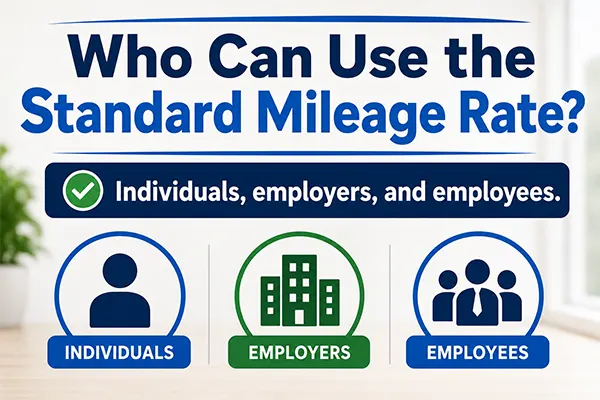
Employees, self-employed persons, and members of the Armed Forces can use the standard current mileage rate.
Here are the following purposes for using the mileage rate.
- As an employee, you can use it when you’re using a personal vehicle for business purposes. This activity is subject to the employee’s reimbursement policy.
- A self-employed person can also deduct the current federal mileage rate when they drive for their own company, whether they own a small or large-scale business.
- All active duty members of the Armed Forces for moving purposes.
- People who personally use a vehicle for medical purposes or for charitable organizations.
Are Companies Required to Pay for Mileage?
No, there is no federal law that requires companies to pay the current mileage rate when employees use a personal vehicle for business.
But many state and local governments set mileage regulations. So, take a look at this section to learn further state laws!
1. California
Under state law (Labor Code Section 2802), companies are required to pay reimbursement to employees for all expenses, such as mileage and fuel. In other words, when workers use their personal vehicles for business-related work, they will get full payment in return.
2. Massachusetts
According to the MA state law, when employers ask employees to travel from one place to another for official purposes, they should fully reimburse them. It includes fuel, travel costs, and other expenses.
3. Illinois
The state law in IL requires an employer to repay employees within 30 business days of incurring the proven expense. It simply means that a company should reimburse its workers for all losses and expenses incurred in the course of business operations.
Advantages of the Federal Mileage Rate
Advantages of the federal mileage rate include reducing the burden of collecting receipts, deducting expenses from your federal income tax, and getting full reimbursement from companies.
The advantages of the federal mileage rate are the following:
- It reduces the burden of collecting different receipts of gas, fuel, date, destination, and vehicle purposes. You can simply calculate your total miles and multiply them by 72.5 cents.
- This also allows individuals, self-employed, and employees or HR to deduct all expenses related to business, medical, and moving purposes from federal income tax.
- For employees, it helps them feel satisfied that they will get full reimbursement for fuel, mileage, and travel costs from their employers while accepting a job offer letter.
Also Read: 90 Good Questions To Ask In An Interview: A Detailed Guide For Employers And Candidates
Wrapping Up!
In the United States, the federal mileage rate is 72.5 cents per mile for business, medical, moving, and charitable purposes. It helps everyone to deduct their vehicle expenses from their federal income tax.
Also, you can utilize the Managetrix features to track your actual mileage and manage your employees’ total working hours for reimbursement. This reduces manual errors and automates your work easily.
Frequently Asked Questions
1. What is the 2026 IRS federal mileage rate?
Ans: In 2026, the IRS federal mileage rate is 72.5 cents per mile. It is calculated when a person uses a personal vehicle for business, medical, and moving purposes.
2. Do companies reimburse both gas and miles to employees?
Ans: No, companies don’t reimburse both gas and miles separately. But the IRS federal mileage rate is designed to cover all costs, including gas, depreciation, and insurance.
3. How does the IRS verify your mileage claims?
Ans: The IRS verifies your mileage claims through contemporaneous mileage logs. It requires your original documents that record the specific travel date, time, and total number of miles.
4. What if you forget to record mileage?
Ans: If you forget to record mileage, you can reconstruct a log with the help of supporting documents, such as calendar dates, bank statements, driving apps, and maintenance records.
- Internal Revenue Service (IRS) Standard Mileage Rates – Congress.Gov