“Your brand is what other people say about you when you’re not in the room.”
— Jeff Bezos (Amazon CEO)
Small businesses think branding means a logo, a color palette, or a memorable tagline. Those things matter, and branding professionals will tell you they’re only the visible tip of a much larger business asset.
A brand is how people who interact with you see you. Whether customers trust you enough to buy. Whether talented candidates apply for your jobs and stay once they join. Whether partners see you as a reliable company worth working with.
So, branding isn’t just marketing. It’s a growth strategy that shapes nearly every part of your business.
This guide explores why branding goes beyond advertising and how even SMBs can use it to strengthen hiring, retention, customer loyalty, trust, and long-term growth.
KEY TAKEAWAYS
- On top of marketing, branding shapes how customers, partners, and employees see you.
- A strong brand lowers customer acquisition costs by encouraging referrals, repeat business, and long-term loyalty.
- Employer branding helps small businesses compete for top talent by communicating culture, values, and growth opportunities.
- Consistent branding across customer experience, workplace culture, and digital channels creates lasting competitive advantages.
What Brand Building Actually Means (And What It Isn’t)
Marketing and branding often get treated as the same activity, but they serve different purposes. Marketing is about promotion: running campaigns, generating leads, and driving short-term action. Brand building is about perception: shaping how people think and feel about a business over time.
Marketing creates attention. A strong brand influences how people behave for years, often without any active campaign running at all.
| Marketing Activities | Brand Building Activities |
| Running paid ad campaigns | Defining company values and voice |
| Sending promotional emails | Ensuring consistent customer experience |
| Launching a seasonal sale | Building a reputation for reliability |
| Posting social media content | Shaping how employees represent the company |
| Measuring campaign conversions | Measuring long-term trust and recall |
Brand as an Asset, Not a Campaign
The most useful way to think about a brand is as a business asset, similar to equipment, intellectual property, or a customer list. It appreciates with consistent investment and depreciates with neglect. Unlike a campaign, it does not have a start and end date. It is built through every interaction a business has, whether that is a customer service call, a job interview, or a five-star review.
The Business Case for Brand Building Beyond Sales
Brand equity refers to the value a business gains simply because people recognize and trust its name. This value shows up in ways that are easy to overlook: customers who choose a familiar business over a cheaper competitor, employees who stay because they believe in what the company represents, and investors or lenders who see brand strength as a sign of stability.
Strong brands compete on value instead of price. It automatically comes with better pricing. When customers already trust a name, they are less likely to shop purely on price.
Besides branding, modern small businesses need to address some other aspects as well to actually grow.
How Brand Reduces Customer Acquisition Costs Over Time
Every new customer costs money to acquire, whether through advertising, sales outreach, or discounts. A recognizable, trusted brand lowers that cost over time because word of mouth and repeat business start doing part of the work.
Research from marketing analytics firms has repeatedly shown that acquiring a new customer costs significantly more than retaining an existing one, and strong brand recognition is one of the biggest factors in customer retention. For SMBs operating on a tight budget, this is not a minor detail. It decides whether they’ll constantly rely on paid advertising or not.
Brand Building’s Role in Attracting the Right Employees
Today’s candidates evaluate employers the same way customers evaluate brands. Even a well-written job posting can struggle to attract strong applicants if research reveals:
- Inconsistency
- Dated website
- No clear sense of company values
This is especially true for small businesses competing against larger companies with recognizable names. A clear, authentic brand can level that playing field by giving candidates a reason to choose a smaller company over a bigger one.
Employer Brand vs. Consumer Brand: Are They the Same Thing?
No, but they overlap. A consumer brand focuses on how customers perceive the business. An employer brand focuses on how current and potential employees perceive it as a place to work. Both are shaped by the same underlying values, but they are communicated differently.
A company might have excellent customer-facing branding but a weak employer brand if it has never clearly communicated what it offers employees beyond a paycheck: growth opportunities, flexibility, culture, or purpose.
Small Business Examples of Strong Employer Branding
Consider two SMBs in the same industry with similar pay. One has a careers page outlining its values, culture, and real employee stories. The other has a generic “we’re hiring” post with no additional context.
Candidates consistently gravitate toward the first, even when compensation is comparable, because the brand signals stability and clarity. Small businesses that invest even modestly in defining and communicating their employer brand tend to see stronger applicant quality and faster hiring cycles.
How Brand Shapes Employee Retention and Culture
A brand is not just external. Employees quickly notice the gap between what leadership promises and what they experience every day. When those two things align, trust builds. When they do not, disengagement follows quickly.
For example, a business that markets itself as innovative but discourages new ideas internally creates a disconnect that employees notice fast. Over time, this gap between stated brand and lived experience is one of the most common drivers of turnover.
When Employees Don’t Believe the Brand They Represent
Employees are often a business’s most visible brand ambassadors, whether through customer interactions, social media, or simply how they describe their workplace to friends and family. If employees do not genuinely believe in the brand, that disconnect becomes visible to customers as well.
This is why brand building cannot be treated as a marketing-only initiative. It requires buy-in from the people delivering the experience the brand promises.
Practical Ways to Align Internal Culture With External Brand
A few signs that internal culture and external brand have drifted apart:
- Employees describe the company differently than its marketing materials do
- Turnover is high despite competitive pay
- Customer reviews mention inconsistency in service quality
- New hires express confusion about company values within their first few months
Leadership rarely references the company’s stated mission in day-to-day decisions
The infographic shows what an aligned brand looks like:
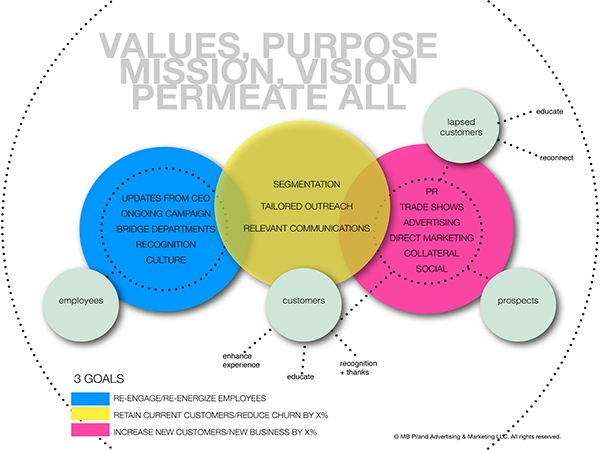
Achieving this often starts with simple steps: involving employees in defining company values, being transparent about challenges, and ensuring leadership behavior reflects what the brand claims to stand for.
Brand Building as a Trust Signal for Customers and Partners
Trust isn’t created through one exceptional experience. It’s built through repetition. A business that delivers a consistent experience, whether in product quality, communication tone, or customer service, becomes predictable in a good way. Customers and partners come to know what to expect, and that predictability is a major driver of long-term loyalty.
Inconsistency, on the other hand, erodes trust quickly, even if each interaction is not necessarily bad. A brand that feels different every time a customer interacts with it creates uncertainty, and uncertainty is the enemy of trust.
The Role of Reviews, Testimonials, and Word of Mouth
Online reviews have become one of the strongest external validators of brand trust. According to consumer trust research from Edelman and similar organizations, a large majority of consumers say they trust peer recommendations and reviews more than direct advertising from a business.
For small businesses, this means that every customer interaction is effectively a branding opportunity, since a single strong or weak experience can influence dozens of potential customers through reviews and word of mouth.
Brand Trust and B2B Partnerships or Vendor Relationships
Brand trust is not limited to consumer-facing businesses. Vendors, suppliers, and potential business partners also evaluate brand reputation before entering agreements. SMBs with a clear, professional, and consistent brand presence are often seen as lower risk, which can open doors to partnerships that might otherwise go to larger, more established competitors.
Building Brand Visibility in a Digital First World
A well-defined brand only creates value if people can actually find it. Branding builds reputation, while visibility determines whether people ever discover that reputation.
The Role of Content, SEO, and Online Authority in Brand Perception
A strong brand still needs to be visible where people are actually looking, and for most businesses today, that means search engines. Consistent messaging matters, but so does whether a business shows up when someone searches for it, its products, or its industry.
This is where off-page SEO plays a supporting role. Businesses that build domain authority through strategies like working with a link building agency often see their content, careers pages, and brand messaging surface more reliably in search results, which reinforces the brand image they have worked to build. A well-designed website with strong values means little if it rarely appears when the right audience is searching.
Consistency Across Website, Social, and Search Results
Brand consistency does not stop at logos and color schemes. It extends to how a business appears across every digital touchpoint, including its website copy, social media presence, and even how it is described in third-party listings and search results. Video is increasingly part of that mix too, and tools like Google VEO 3.1 now let small businesses produce consistent, on-brand video content across channels without a full production team.
Even so, gaps or contradictions across these channels can quietly undermine years of brand-building effort.
How Small Businesses Can Start Building Their Brand (Without a Big Budget)
SMBs with limited budgets can surely build a compelling brand.
Define Your Brand Values and Voice First
Before any visual or marketing work begins, a business needs clarity on what it actually stands for. This includes its core values, the tone it uses to communicate, and what it wants to be known for. Skipping this step often leads to brand efforts that look polished but feel hollow.
Prioritize Consistency Over Perfection
A small business does not need a flawless brand identity to start seeing results. It needs a consistent one. A simple, clearly defined brand applied consistently will outperform an elaborate brand strategy that changes direction every few months.
Involve Employees as Brand Ambassadors
Since employees often represent the brand as much as any marketing material does, involving them early builds genuine alignment. This can be as simple as asking for their input on company values or encouraging them to share their own experiences publicly.
Track Brand Perception Over Time
Branding is difficult to measure with a single metric, but a few indicators help track progress:
- Customer and employee surveys measuring perception and satisfaction
- Growth in referral-based business or applications
- Consistency of reviews and testimonials over time
- Improvements in how often the business is found through search rather than paid ads
Brand Building Starter Checklist for Small Businesses
- Define three to five core brand values
- Audit your website and social channels for consistency
- Collect employee feedback on how well culture matches stated values
- Ensure your careers page reflects your actual workplace, not just generic language
- Review recent customer feedback for recurring themes
- Set a simple system to track brand-related metrics quarterly
Common Brand Building Mistakes Small Businesses Make
Just don’t make these grave mistakes. Instead take a better path:
| Mistake | Why It Hurts | Better Approach |
| Treating brand as a one-time project | Brand perception erodes without ongoing attention | Build brand review into regular business planning |
| Inconsistent messaging across channels | Creates confusion and reduces trust | Create simple brand guidelines everyone can follow |
| Ignoring internal brand alignment | Employees disengage when brand and culture do not match | Involve employees in shaping and reinforcing brand values |
| Focusing only on visual identity | Visuals alone do not build trust or loyalty | Balance visual identity with consistent experience and values |
| Neglecting online visibility | A strong brand with no visibility limits growth | Pair brand work with consistent content and SEO efforts |
Conclusion
Brand building is a business-wide investment that shapes hiring outcomes, employee retention, customer trust, and long-term visibility. But it’s not a luxury reserved for large companies with massive marketing budgets. Still, small businesses that treat brands as something to define once and forget often struggle with inconsistency that quietly undermines growth in every one of these areas.
The businesses that get the most value from branding are the ones that revisit it regularly, involve employees in shaping it, and ensure it shows up consistently everywhere a customer, candidate, or partner might encounter them. As a business grows, having strong internal systems in place, including reliable HR processes, helps ensure that the culture behind the brand scales just as intentionally as the brand itself.
Frequently Asked Questions
1. What is the difference between branding and marketing?
Ans: Marketing focuses on promoting products or services to drive short-term action, such as a sale or sign-up. Branding focuses on shaping how people perceive a business over time, including its values, reputation, and consistency across every interaction.
2. How much should a small business spend on brand building?
Ans: There is no fixed number, since brand building often relies more on consistency and clarity than budget. Many effective branding steps, such as defining values or aligning internal culture, cost little beyond time and intentional effort.
3. Can brand building help with employee retention?
Ans: Yes. When a company’s internal culture genuinely reflects its stated brand values, employees are more likely to feel aligned with their workplace, which reduces turnover and improves engagement.
4. How long does it take to build a strong brand?
Ans: Branding is a long-term effort rather than a one-time project. Meaningful shifts in perception typically take months to years of consistent effort, though some improvements, like clearer messaging, can show results faster.
5. Does brand building help with SEO and online visibility?
Ans: Indirectly, yes. A consistent, well-communicated brand supports stronger content, better engagement, and a more shareable, trustworthy online presence, all of which contribute to improved search visibility over time.
6. What is the first step in building a brand for a new business?
Ans: The first step is defining core values and voice before any visual identity work begins. Without this foundation, branding efforts tend to look polished but lack the consistency needed to build genuine trust.