

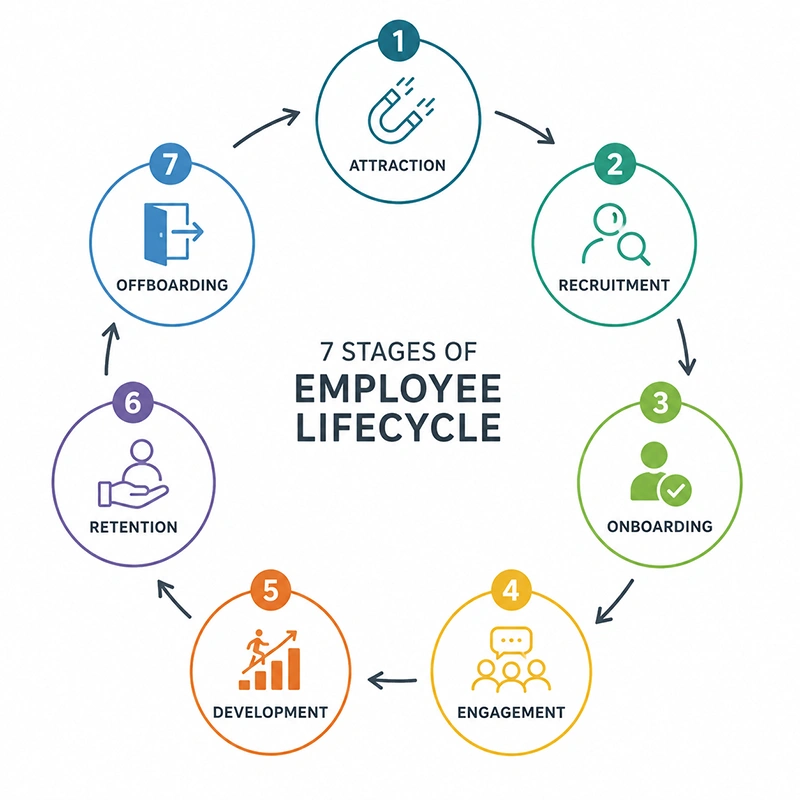
An employee life cycle is a structured organisational framework that manages employees’ journey and experience at every stage of their tenure, from job attraction, recruitment, and onboarding to development, retention, and offboarding.
According to LinkedIn’s data, the top 3 aspects that candidates look for before applying for a job include compensation (63%), work-life balance (49%), and flexible work arrangements (44%).
This highlights that an employee’s journey begins before the application, when candidates start seeking a job opportunity. Hence, proper optimization and management become crucial to attract the top talent. To understand what an employee life cycle means and how to optimise it, follow this article, offering in-depth insights into an employee lifecycle.
What is the Employee Life Cycle?
An employee lifecycle is an organisational framework that tracks every phase of an employee’s journey with the organisation. This cycle begins when a potential employee first learns about the company, continues through their employment, and finally ends when they leave the organisation.
It includes every major interaction and experience throughout the employment relationship, including attracting candidates, hiring, onboarding, development, engagement, performance management, retention, and offboarding.
Here are the 7 stages of an employee lifecycle at a glance:
| S No. | Employee Lifecycle Phases | What It Involves |
| 1. | Attraction | Building a strong employer brand to attract the right talent pool of job seekers. |
| 2. | Recruitment | Sourcing, screening, and interviewing candidates to select the right applicant. |
| 3. | Onboarding | Transitioning new hires into their roles by providing necessary training, resources, and introducing them to new teams and culture. |
| 4. | Engagement | Providing motivation, fostering open communication, and development opportunities to enhance job satisfaction. |
| 5. | Development | Necessary training, upskilling, mentoring, and career growth |
| 6. | Retention | Keeping top performers through work-life balance, competitive pay, and positive work culture. |
| 7. | Offboarding | Managing graceful exits and resignations, knowledge transfer, and exit interviews. |
7 Stages of Employee Life Cycle: From Attraction to Offboarding
Attracting, recruiting, onboarding, engaging, providing development opportunities, retaining, and offboarding are the 7 stages of the employee life cycle. However, to attract the best talent pool, you must optimise every stage.
Here are the 7 stages of the employee life cycle:
1. Attraction
The attraction stage begins before a candidate submits an application. It involves building a strong employer brand and awareness by highlighting the positive company culture that attracts top talent. Candidates evaluate a company’s reputation, culture, values, benefits, and career growth opportunities before applying.
How to Optimise the Attraction Stage?
- Build a strategic social media presence, highlighting the positive culture, work-life balance, and day-to-day engaging events.
- Showcase leadership, the company’s goals and values, alumni reviews, and achievements.
- Maintain informative career pages and sections on your website.
- Communicate your core values and culture and how it supports a positive and thriving workplace.
2. Recruitment
Once the candidates have applied, the recruitment step focuses on converting suitable candidates into employees. Recruitment is a broad spectrum and includes identifying hiring needs, creating job descriptions, advertising, sourcing, screening applications and resumes, conducting interviews and background checks, selecting suitable candidates, sending job offer letters, and completing the pre-employment formalities.
How to Optimise the Recruitment Stage?
- Create an enticing job description that attracts top talent as well as the candidates who value the organisation’s culture.
- Evaluate candidates against structured and consistent criteria to remove unnecessary bias.
- Offer constructive feedback and ensure clear communication at every stage, including application updates and interview timelines.
- Use ATS (Applicant Tracking System) to manage recruitment in one place and eliminate administrative efforts.
3. Onboarding
The onboarding stage begins when a candidate accepts the job offer and continues as an employee in the organisation. It includes welcoming new hires, helping them understand their role, responsibilities, workplace culture, policies, tools, and setting expectations during the initial month.
How To Optimise The Onboarding Stage?
- Share the essential information, schedules, and expectations clearly before the employee joins to prevent culture shock.
- Encourage new hires to engage and communicate with existing employees by organising social activities or orientation programs.
- Discuss challenges, role clarity, progress, and support requirements during the initial days.
- Give new hires an experienced mentor as a reliable point of contact who provides guidance and answers workplace questions.
4. Engagement
Employee engagement is the process of building an emotional commitment and professional relationship with workers at every stage of the employee life cycle. It involves motivating employees, fostering open communication, organising employee development and recognition programs, and providing fair compensation, benefits, and appreciation, which boosts morale and trust in management.
How To Optimise The Engagement Stage?
- Consistent acknowledgement and celebrating achievements. Organise recognition and development programs.
- Seek regular feedback through surveys or one-on-one conversations to understand their concerns and ensure they are addressed properly.
- Support physical and mental well-being and prioritize work-life balance.
- Train managers to communicate expectations and provide support.
5. Development
One of the most crucial stages of the employee lifecycle, development involves providing training, upskilling, and career growth opportunities. It primarily focuses on improving employees’ knowledge, skills, capabilities, and career potential, beneficial for both current roles and future responsibilities.
How To Optimise The Development Stage?
- Beyond training sessions, implement formal mentorship sessions with experienced employees.
- Identify the skill gaps and use performance assessments to determine the upskilling needs.
- Offer a mix of formal courses and certifications, hands-on experience, mentorship, workshops, job rotation, and cross-functional team projects.
- Give dedicated growth time in which employees can focus on upskilling without compromising efficiency.
6. Retention
Retention refers to valuing the employees in the organisation and keeping them motivated so they stay longer. It involves identifying the factors that may encourage them to leave and creating the opportunities that support long-term employment, such as work-life balance, fair pay, a positive environment, and more.
How To Optimise The Retention Stage?
- Cultivate loyalty and trust by understanding employees’ concerns, offering and taking constructive feedback, and ensuring that employees feel heard and understood.
- Regularly evaluate compensation, benefits, flexibility, recognition, and development opportunities.
- Set clear growth paths, communicate promotion criteria and advancement opportunities.
- Support healthy work-life balance, analyse exit interviews, and identify the recurring issues that prompt employees to leave.
Did You Know?
According to the Bureau of Labor Statistics, the number and rate of quits were unchanged at 3.2 million and 2.0 percent in June 2026, highlighting the importance of improving and optimizing retention activities properly.
7. Offboarding
Offboarding is the final stage of the employee lifecycle. It begins when the employee submits a formal resignation, retires, or when the employment contract ends. A structured offboarding process involves exit interviews, managing resignation, knowledge and company asset transfer, and legal compliance.
How To Optimise The Offboarding Stage?
- Ensure productivity and motivation during the notice period and foster open communication.
- Conduct constructive exit interviews and identify areas that need future improvement.
- Offer a respectful employee experience by providing necessary documentation on time and offering positive references.
- Create a structured exit process with final documentation, financial settlements, and access revocation.
Why Is Employee Life Cycle Management Important?
For organisations to create a consistent and positive work experience at every stage of employment, the employee lifecycle becomes crucial. It supports better talent acquisition, employee development, engagement, and retention.
Here’s why employee life cycle management is important:
- Talent Acquisition and Retention: Attracting and retaining the right talent happens through the right practices. Defining a clear employee journey, setting realistic standards and expectations, fostering open communication, offering fair pay, and career growth opportunities are factors that decide whether top talent stays or not.
- Improve Employees’ Performance and Productivity: By offering training and development programs, acknowledging and appreciating success, and providing direct and indirect motivation, employees’ performance and productivity are amplified, ultimately benefiting the organisation.
- Robust Performance Management: Continuous performance assessment and a constructive feedback loop ensure alignment of personal and organisational goals. Since recognition drives productivity, when employees are provided with clear expectations, feedback, and appreciation, they tend to perform better.
- Improves Workforce Planning: By enabling HR teams to anticipate hiring needs, skill gaps, succession requirements, and potential turnover, it significantly improves workforce planning, making it proactive and reducing disruptions caused by unexpected vacancies.
- Smooth Employee Exits:
A structured offboarding process supports easy knowledge transfer, protects organisational information, and offers valuable feedback through exit interviews.
Suggested Readings: Experience Letter Format & Samples (PDF & Word)
Key Metrics To Track Within the Employee Life Cycle
Here are the key metrics that must be tracked to improve employee lifecycle management:
| S No. | Employee Lifecycle Stages | Key Metrics to Track |
| 1. | Attraction |
|
| 2. | Recruitment |
|
| 3. | Onboarding |
|
| 4. | Engagement |
|
| 5. | Development |
|
| 6. | Retention |
|
| 7. | Offboarding |
|
Final Thoughts
To sum up, an employee lifecycle offers a framework that manages employees’ journey and experience at every stage of their tenure. Hence, by optimizing each stage and building a strong employer brand, organisations can attract the best talent, strengthen engagement and retention, and build a productive workforce.
Ultimately, effective employee lifecycle management benefits both employees and the organisation by aligning their goals and supporting long-term growth.
Frequently Asked Questions (FAQs)
1. What are the seven stages of the employee life cycle model?
Ans. Attraction, recruitment, onboarding, engagement, development, retention, and offboarding are the seven stages of an employee life cycle model.
2. What is employee lifecycle management?
Ans. Employee lifecycle management is the process of tracking an employee’s entire journey with an organisation, from attraction and onboarding to offboarding. It tracks an employee’s experience at every stage of their tenure.
3. Who is responsible for managing the employee lifecycle stages?
Ans. Generally, HR manages the employee lifecycle stages; however, because employees interact with multiple people and processes throughout their employment, it may require an organisation-wide approach.
4. How to optimise the employee lifecycle?
Ans. Data-driven HR strategies and improvements at every stage of employment are the best ways to optimise the employee lifecycle. Open and clear communication, fair pay, smart development, retention, and engagement strategies can help you optimise the employee lifecycle.
