

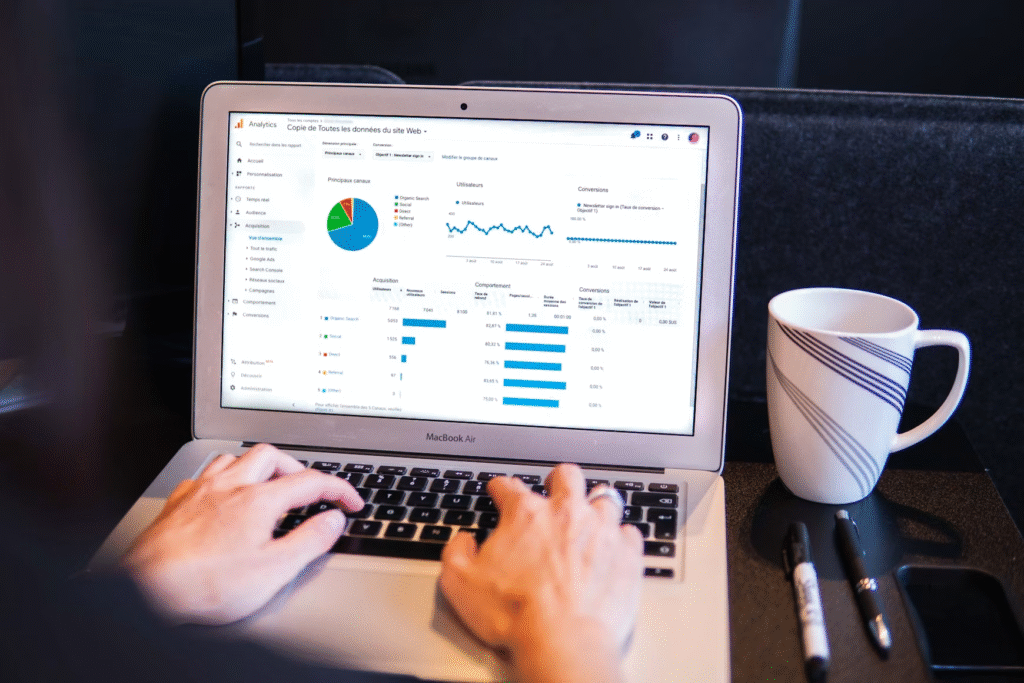
In business, it is better to use analytics to make important decisions; data analytics can show the status of the business and what could be the right move for the best growth.
By analysing past performance, it is possible to determine what is right and what could be mistakes. The result is quicker problem detection, more focused planning, and fewer decisions based on assumptions.
Read the blog to learn more on How Analytics Drive Better Business Decisions
From Data to Insight
Start with a specific business question, like why repeat purchases fell last quarter or which scheduling changes lower overtime. Next, find the data needed to answer it and check that teams record data consistently. A great dashboard can still mislead people when categories or date ranges change between systems.
Give each metric an owner, a reporting schedule, and a cue for action. For example, a retailer tracking customer acquisition can ask referral program software for its sales data, then compare referred customers with other groups. Purchase frequency, average transaction value, and retention show whether it affects lasting customers or creates a short-lived spike.
Key HR Metrics to Track
Workforce data can show staffing pressure before it affects customers or budgets. Useful metrics include voluntary turnover, time to fill open roles, absenteeism, overtime, and internal promotion rates. The best mix depends on current priorities. A growing company watches hiring speed, and a mature operation focuses more on retention and productivity.
A useful HR data analytics guide can set consistent definitions and reporting methods. Managers should also break down results by department, tenure, or role when privacy rules permit. If annual turnover is 18 percent overall but gets to 32 percent among employees in their first six months, onboarding needs closer review. Guidance on building data-driven HR teams helps connect these findings to operational goals.
Understanding Customer Behavior
Join transaction records, service interactions, and campaign responses to build a clearer picture of customer behavior. Look for patterns in many measures because one number does not tell the full story. A higher average order value can look positive, for instance, but it could coincide with fewer visits and lower overall retention.
Group customers by useful traits like first purchase date, buying frequency,y or acquisition channel. Then compare how each group behaves over 30, 6,0 and 90 days. A restaurant chain may find that customers acquired from a seasonal promotion visit twice during the first month but rarely return afterward. That finding supports a follow-up offer or loyalty message made to encourage a third visit, which is more useful than expanding the original promotion.
Forecasting Future Trends
Forecasts work best when teams treat them as updated guesses and not fixed words. Start with historical sales, staffing, or inventory data, then account for known influences such as seasonal demand, planned price shifts, and scheduled campaigns. Record the rationale behind every forecast so managers can understand why projections changed.
Use many situations when uncertainty is high. A service business could make baseline, high-demand, and low-demand staffing forecasts for the next quarter. If weekly needed moves 10 percent above the baseline for three consecutive weeks, the company may add shifts or speed up hiring. Check predicted results against actual outcomes each month. Large gaps may show missing data, unusual events,s or assumptions that no longer reflect how the business works.
Strategic Decision Making
Put analytics into the decision process before budgets and plans are done. A good decision brief should state the question, summarize the useful data, explain any data limits, and show the expected effect of each option. Pick someone to check the results later so the organization learns from the choice.
A company must pick between extending store hours and growing digital promotions. Managers can compare hourly revenue, labor costs, conversion rates, and repeat purchase rates, then test the best option in a small group of locations. Choose success measures and an end date before the test begins. When the trial closes, the team will have proof tied to a real decision, not another dashboard that gets attention but produces no action.
The most valuable analytics habit is recording what changed after a decision. That record helps future managers understand which beliefs held up, which shows mattered, and when a successful test should be repeated or expanded.
Frequently Asked Questions
1. What is data analytics?
Ans: Data analytics is the process of examining data to identify patterns, trends, and insights that support better decision-making.
2. How does data analytics improve business decisions?
Ans: By providing business evidence-based information that helps organizations lower uncertainty and make more strategic choices.
3. What are the four types of business analytics?
Ans: The four types are descriptive analytics (what happened), diagnostic analytics (why it happened), predictive analytics (what will happen), and prescriptive analytics (what to do about it).
