

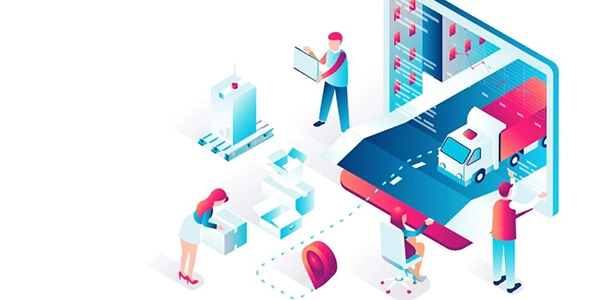
Last-mile delivery is where most logistics issues arise. It is the final step, but also the most crucial and complex. Routes change, traffic is unpredictable, and customer expectations are always at their peak.
So, even small inefficiencies at this stage quickly lead to delays, missed deliveries, and high costs. This is why dispatch software addresses such issues by organizing processes and bringing structure to operations that are often handled with limited coordination.
Let’s understand how tasks are efficiently automated with this system and if communication can be streamlined using this.
Key Takeaways
- Dispatch software assists in optimizing delivery routes to prevent delays.
- It also streamlines communication by unifying the channels and displaying everything in one place.
- Many time-consuming tasks are automated to increase productivity.
- The software reduces inefficiency and saves the firm a lot of expenses in the long run.
The Problem With Manual Dispatch
Manual dispatch depends heavily on human coordination, as drivers are assigned routes based on static plans, and adjustments happen reactively.
This creates many issues. Routes are not altered in real time, communication between drivers and dispatchers ends up being delayed, and tracking remains inconsistent.
Common problems include:
- Inefficient routes that increase fuel and time costs
- Limited visibility into driver location and delivery status
- Delays in responding to changes, such as traffic or cancellations
As delivery volume increases, these issues scale quickly.
Real-Time Route Optimization
One of the biggest advantages of dispatch software is dynamic routing. Instead of following fixed routes, the system adjusts based on real-time information.
This includes traffic conditions, delivery windows, and driver availability. These factors are taken into consideration, and the routes are optimized continuously to improve overall efficiency.
Drivers spend less time on the road and process more deliveries within the same timeframe.
What Route Optimization Solves
- Reduces total distance traveled per route
- Minimizes delays caused by traffic or congestion
- Balances workloads across drivers
This directly improves delivery speed and reduces operational cost.
Improve Visibility Across the Delivery Process
Lack of visibility is a major issue faced in last-mile deliveries. Without accurate tracking, it is difficult to manage certain operations effectively.
Dispatch software provides real-time updates on driver location, completion status, and delivery progress.
This allows dispatchers to constantly review performance and make alterations whenever required.
Customers also benefit significantly from improved tracking as they are able to see when deliveries are expected and receive updates if there are any changes to schedules.
Streamline Communication Between Teams
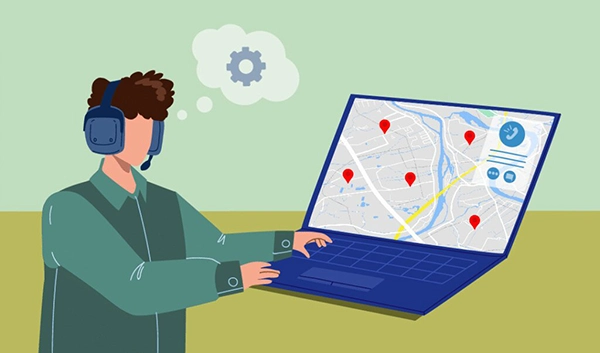
Communication delays commonly cause inefficiency issues. Drivers may not receive updates on time, and dispatchers may not have accurate information from the field.
Dispatch software unifies communication channels, where updates are sent instantly, and all parties operate from the same system.
This greatly reduces misunderstandings and ensures that instructions are understood clearly by every department.
Faster communication leads to quicker decision-making and fewer errors.
Automate Dispatching and Scheduling
Manual scheduling takes time and often leads to suboptimal assignments. Dispatch software fixes these issues by smoothly automating the workflow.
The system assigns deliveries based on predefined guidelines and information such as location, capacity, and delivery priority.
This ensures that resources are used efficiently.
Tasks That Can Be Automated
- Assigning deliveries to the most suitable driver
- Scheduling routes based on delivery windows
- Updating schedules when conditions change
Automation reduces workload for dispatchers and improves consistency.
Fun Fact
Advanced systems use proprietary geocoding engines to decode incomplete or poorly written customer addresses.
Increase Delivery Accuracy
Errors in deliveries inflate costs and reduce customer satisfaction. Incorrect addresses, missed stops, or delayed deliveries all impact performance.
Dispatch software enhances accuracy by providing detailed instructions and real-time updates.
Drivers have access to route details, customer information, and delivery requirements, all compiled in one place.
This reduces confusion and ensures that deliveries are completed correctly.
Support Scalability in Growing Operations
As delivery operations grow, complexity increases. More drivers, more routes, and more deliveries create additional challenges.
Dispatch software is designed to handle this growth. It scales with the operation without requiring proportional increases in manual effort.
This enables organizations to expand their reach and deliver to more locations without losing control over performance.
Platforms offering software for last mile delivery provide a stable infrastructure needed to better manage and larger volumes efficiently by supporting real-time updates, centralized tracking, and automated operations.
Scalability becomes manageable instead of overwhelming.
Use Data to Improve Performance
Dispatch software collects data across all delivery operations. This includes route efficiency, delivery times, and driver performance.
This data can be studied to identify trends and areas for improvement.
Key Metrics to Track
- Average delivery time per route
- Cost per delivery
- On-time delivery rate
These insights help refine processes and improve overall efficiency.
Reduce Operational Costs
Increased efficiency directly translates to greater savings on expenses, optimized routes reduce fuel consumption, automation reduces labor costs, and improved accuracy minimizes re-delivery expenses.
With time, these savings become significantly useful as the system identifies inefficiencies that may not be visible otherwise.
Final Take
Last-mile delivery is complex, but it does not need to be disorganized. Dispatch software brings structure, visibility, and automation to the process, thereby improving routing, communication, and accuracy while also reducing costs and manual effort significantly.
As delivery demands continue to grow, using the right tools becomes necessary. Dispatch software allows businesses to handle complexity without losing efficiency.
FAQs
1. How is communication enhanced using dispatch software?
Ans: All communication channels are unified and routed through a single place, thereby optimizing the whole process and ensuring no misunderstandings take place.
2. Does it provide automation benefits?
Ans: Yes, many tasks like assigning deliveries, routing, and assigning schedules are effectively automated using the dispatch software.
3. What are the key metrics to track in last-mile deliveries?
Ans: The following are key metrics:
Average delivery time per route
Cost per delivery
On-time delivery rate
4. What does route optimization solve?
Ans: The following are the benefits that route optimization provides:
Reduces total distance traveled per route
Minimizes delays caused by traffic or congestion
Balances workloads across drivers
