

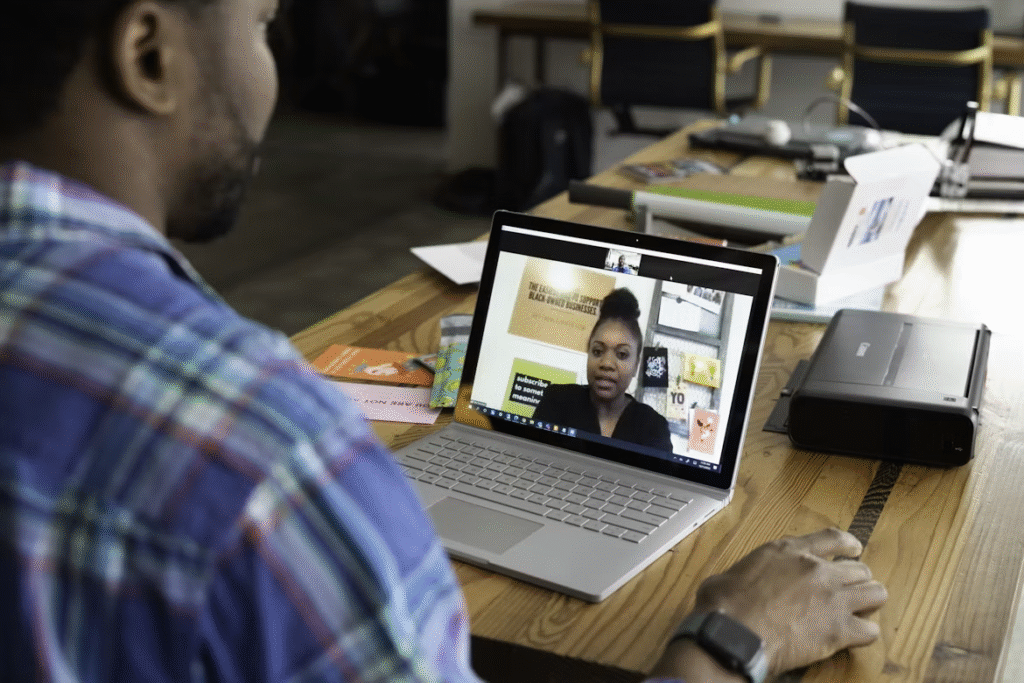
Have you noticed how remote hiring has become common in the past few years? The flexibility and time-saving it serves has made it an obvious choice. But along come modern challenges such as AI-generated faces, altered voices, and fake candidate information. These hurdles make it difficult to determine whether the candidate is genuine.
In all these, Deepfake impersonation has become a major concern. Companies have to move forward with identity verification and behaviour checks has become important.
Keep reading to explore how to detect Deepfake impersonation in remote hiring.
Why It’s So Difficult to Tell a Real Candidate From a Deepfake
A few years back, finding ways to decide between a real and fake candidate would be irrelevant. In 2026, remote hiring has made it possible.
In fact, Gartner predicts that one in every four candidate profiles worldwide will be fake by 2028. Not only that, but 6% of the 3,000 candidates surveyed in 2025 admitted to committing interview fraud. Jamie Kohn, Senior Research Director at Gartner HR, said, “It’s getting harder for employers to evaluate candidates’ true abilities, and in some cases, their identities. Employers are increasingly concerned about candidate fraud.”
Connecting the same, CBS News shared a real-life, shocking example. A cybersecurity team found an AI-generated job seeker during an interview. When interviewer asked the candidate to put their hand on their face, reality came across.
As a result, the company changed its hiring process to include in-person interviews for potential employees. That simple test worked in this particular case, but it also showed why detection is not so easy. Let’s look at some of the main reasons:
- The candidate can use AI models to fake the voice and face.
- The deception may begin way before the interview. This has to do with a fabricated profile, resume, photograph, or employment history.
- Remote discussions do not reveal each aspect that physical interaction can.
- Digital oddities are not always a smoking gun. In other words, a frozen frame, lip-sync problem, or unusual expression may be either a sign of manipulation or just a poor internet connection.
For these reasons, it has become a mandatory aspect for employers to find smart ways to identify whether the hiring process is real or fake.
Also, learn how data science is transforming hiring and workforce demand.
The Digital Double Behind the Face and Voice
Up until this point, most people were aware of pre-recorded stuff and its dangers. What we are discussing is complex precisely because it is a fraud that happens ‘virtually’ live. A person may be present behind the screen while AI changes what the recruiter sees and hears. So, it’s a kind of digital double, where the real operator supplies the movements and speech, while software alters the face, voice, or both.
Pindrop found 100 fake identities among 827 applicants for a senior back-end developer role after investigating unusual interview audio and using its fraud-detection technology.
Fortune also shared that around 17% of HR managers surveyed by Resume Genius had encountered candidates using deepfake technology. To create a digital double, the following layers of manipulation are becoming common:
- Face swapping, where the software replaces the operator’s face with another person’s as it continues to track their movements
- Facial manipulation, which involves modifying facial expressions and appearance based on how a person talks and reacts
- Voice alteration, to make the speaker sound like someone else
- A manipulated live feed, where the output is presented through a video-conferencing application as a normal-looking camera feed
Often, it becomes really hard to identify whether the candidate is real or not. Voice, video and all seem to be aligning. Here, one simply has to try to find out any point that might indicate credibility.
Sometimes, recruiters suspect fraud due to a lack of synchronization between audio and video, but that’s not a foolproof method of detection. Audio delays, compression, poor lighting, and basic camera problems can produce similar signs. If multiple signs fail to agree, then there is some concrete reason to double-check.
How Identity Verification Lifts the Mask of False Candidates
While face and voice can be altered, real details cannot be. Identity verification is helpful to match the person and details with the candidate appearing in the interview.
A remote hiring process can use several checks to connect the candidate to their claimed identity. Let’s take a look at them:
- Government-issued identity documents can be verified to see if the submitted name and identifying information belong to a real person.
- Whenever it is necessary, professional details should be checked with independent records.
- Identity continuity must be verified, which includes checking whether a candidate’s name, documents, contact information, interview details, and information provided at later hiring stages reveal a single identity.
- Identity checks should be done at regular intervals while avoiding assumptions.
The administrative side matters because these checks do not happen automatically. Someone has to decide what should be verified, when each check must happen, who reviews the results, and what follows when different details do not match. Such risk management decisions affect the organization as a whole, not just the interview process.
Here, business administration becomes useful. With their wide role, they connect people, modern tech, policies and goals. With rising deepfake concerns, they help to identify reality, check workflows and set effective guidelines.
That only makes advanced education more useful in strengthening such much-needed capabilities. A Doctor of Business Administration (DBA) is designed to help apply advanced business knowledge and research to complex organizational problems like the one we are discussing. Since the option of online DBA programs is available, many professionals are able to apply their knowledge to current organizational challenges.
With rising issues, it has become non-negotiable. Saint Leo University asked employers to upskill themself with continuous training. Does this mean they are asked to detect deepfakes?
It isn’t as straightforward as that (which is good news). The purpose is to strengthen strategic and analytical skills needed to design and improve systems that manage candidate impersonation. Deepfakes may continue to evolve, which means organizations need people and strategies that work when a specific form of deception changes.
When Live Behavior Reveals What the Face Hides
Identity verification confirms who someone claims to be, while liveness detection helps confirm that the person in the interview is actually present.
As per recent research, it’s unwise to depend on a single biometric clue. In one such study, researchers developed a liveness framework that combines face, fingerprint, iris, and movement over time to get a combined result. Their experiments found that this multimodal approach improved the detection of spoofing attacks compared with existing deep-learning approaches.
When the same rule is applied to remote hiring, independent clues that indicate real candidates are inversely proportional to convincing face and voice. The following signs are major for liveness checks during a real-time virtual interaction:
- Unscripted movements or spontaneous actions that show a candidate is actively engaging in the discussion
- Out-of-the-blue rules that lead to the candidate replying with context
- Natural movement over time, including blinking and other similar micro-movements that confirm a real person, not an impersonation
- Rare chances are there that facial colour might be picked up that is connected with blood flow
- Consistency in voice, facial reactions, and movements
- The way the candidate’s replies seem to share about the natural flow of answers.
Since impersonators are getting better at using technology to alter their face or voice, behavioral signs are among the most important. Plus, a candidate’s identity and behavior should show no major signs of change across different stages of hiring. Again, since nervousness, unusual lighting, and poor connection also cause distortions, it is best to use multiple pieces of evidence and investigate inconsistencies on the whole.
How to Catch a Digital Impostor During a Remote Interview
AI may have made impersonation harder to spot, but there are still ways to catch a deepfake. During the interview, verify the candidate’s identity and claims from different angles rather than relying on a single check.
Consider a recent Reuters investigation into an AI-driven deception on GitHub. A student from Texas, Sinan Can Demir, came across what he initially believed to be human developers on the platform while investigating a software update. One account went as far as creating a second persona of a German engineer to add another layer to the deception.
Demir trusted what he felt and used Claude to help confirm his thoughts. The software maintainer then said no to the malicious update. Reuters later verified his account using archived messages and emails from that time.
A remote interview can apply the same principle of not treating a convincing interaction as sufficient evidence of authenticity. Test what you can verify and make the interview harder to fake. Take the following steps to catch an impostor during the process of remote hiring:
- Ask questions related to how a project is made and what approaches are used in it.
- Introduce a role-relevant problem or scenario and ask the candidate to reason through it to test their critical thinking.
- Try to find gaps and contradictions between the resume, application and interview.
- Let the candidate perform a creative or analytical task on the spot.
- Hold important data to check an issue with privacy needs.
- Have another qualified person review the case if inconsistencies remain unresolved.
With these tricks, you will not be acting like a detective. Rather, credibility will be part of the interview process. Also, do not directly reject candidates based on a technical glitch. These might also be real.
Also, learn why companies are expanding their remote teams.
Key Data Points to Consider
Here are the key points to consider from the major resorts and the findings from industry professionals:
| Recent survey of 350+ HR executives | 73% shared challenges with fabricated or vague candidate data |
| Gartner predictions for 2028 | One in every four candidate profiles worldwide will be fake by that year |
| 2025 Fortune report | Pindrop shared 100 fake identities among 827 applicants17% of HR managers surveyed by Resume Genius had come across candidates using deepfake technology |
| Recent study on liveness framework for detecting spoofing attacks | Researchers used face, fingerprint, iris, and movement over time to get a mix result. The multimodal technique improved the detection of spoofing attacks compared with existing deep-learning approaches. |
| Entrust’s 2026 Identity Fraud Report is based on the analysis of one billion identification-verification events across 195 countries and 30+ industries | Deepfakes reported for one in five biometric fraud tries |
Also, when the team can find what fake today is, there will be chances to deal with the next form of impersonation. Entrust’s 2026 Identity Fraud Report has shared that deepfakes accounted for one in five biometric fraud attempts. Meanwhile, deepfake selfies rose by 58% in 2025.
The analysis for the report was conducted on more than one billion identity-verification events across 195 countries and 30+ industries. As impersonation increases in the hiring process, the focus should be on making an unverified identity difficult to turn into trusted access. That is what separates a resilient remote hiring process from one that lays all the burden on detection software.
Conclusion
In the end, Deepfake impersonation is getting more complex to detect over time. But there are still various simple steps that have helped throughout the process. By properly checking the identity, behaviour and live responses, companies can lower the risk of hiring a fake candidate.
A careful interview process helps to protect employees and real applicants. With proper checks, remote hiring can remain both a flexible and a secure way to recruit potential candidates.
FAQs
1. Can deepfakes be detected during a video interview?
Yes. Using identity checks, liveness checks and behavioural clues, deepfakes can be found out during an interview.
2. What are the warning signs of a fake candidate?
Variations in identity sharing, poor audio and video syncing and conflicting statements are the major warning signs of a fake candidate.
3. How can companies make remote hiring safer from impersonation?
By smart use of identity verification, liveness checks, structured interviews and additional screening, remote hiring can be made safer.
