
Today the business is becoming more competitive in ways that the organisations constantly have to upgrade themselves to fit the sky rocketing speed by which things in the reality are occurring. This is why these organisations are constantly searching for ways to improve employee engagement and to deliver a better experience to the customers so that they do not go out of business and they are still relevant.
While traditional training and campaigns still remain valuable, they are not fit to help with the growing speed of operations and that is why most of the organisation and businesses are increasingly searching for ways to include technology in their systems so that the entire process becomes more productive, effective and interactive.
Augmented reality (AR) is one such technology. It combines digital elements, such as 3D models, animations, and interactive instructions, with the real-world environment. Businesses can use AR to simplify employee training, improve product demonstrations, support workplace collaboration, and create engaging customer experiences.
1. What Is Augmented Reality in Business?
This is a term that most people tend to get wrong because they think of something else when they hear the word augmented reality and most of the time it is far from what it actually is. Augmented reality is a technology that enhances the reality we already live in by using devices like smartphones or tablets which use digital data after they extract it from a real world environment. Sometimes even AR-enabled glasses are also used to see the things that are already present in our reality but in a way which makes the whole experience more immersive.
Most people confuse this with virtual reality but it is nothing like it. Virtual reality uses a fully digital environment with no scope of reality inside it and that is why it is often considered a fiction rather than an enhanced experience. Meanwhile an augmented reality only lifts the experience of what people can actually see around them in real time.
In all augmented reality solutions, WebAR platforms like Kivicube are used by businesses to help and support their business operations, especially the ones which are related to employee onboarding, equipment demonstrations, interactive product displays, workplace safety training, and customer education.
2. Improves Employee Training and Onboarding
Employee onboarding and training is one of the most essential parts of a business because whenever a new hire is made, explaining their set of duties and making sure that they understand the workplace policies is extremely crucial to build an organisation where everything runs smoothly.
More companies are starting to include tools like such which help form and augmented reality because they understand that while traditional training is helpful, some people benefit from interactive learning opportunities more. Traditional training depends on using written manuals or providing instructor lead sessions to help the employees settle down in the office space better.
These can also provide an interpersonal connection within the employees which can help them be comfortable around the people others are already working with, however this can also sometimes confuse them on the hierarchy and may create unprofessionalism as interpersonal connections grow. To avoid this augmented reality tools are the perfect replacement.
To make this change you do not necessarily need to create and entirely new system. Instead, you can improve the quality of an already existing system by using Augmented reality which allows employees to explore digital instructions, follow visual demonstrations, and practice specific tasks.
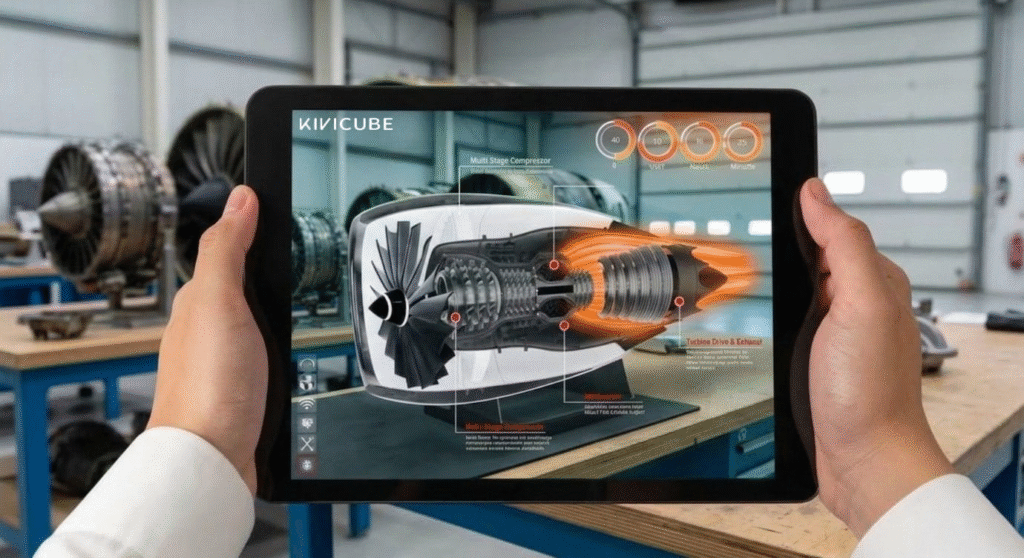
HR teams can consider using augmented reality alongside their existing onboarding processes to:
- Demonstrate workplace procedures visually.
- Help employees understand unfamiliar equipment or systems.
- Provide interactive learning experiences.
- Reinforce important safety instructions.
- Support consistent training across different locations.
One thing worth remembering about All of this is that AR should be used to complement the already existing systems rather than replacing them entirely. This is because human connections and supervision are still an important factor which can help identify situations that an AR might miss. So, only use AR as an addition and not as a replacement for human instruction, practical supervision, and established training materials.
3. Supports Employee Engagement and Workplace Learning
One of the most important features that help boost organisation performance is employee engagement. This means that when employees of an organisation participate in the workplace learning more than any other organisation then that organisation becomes more efficient and their operations become faster. However this can only happen if the employees are willingly engaging in such training and this can be made possible when the training materials which are provided to the employees are relevant, accessible, and easy to understand.
Some people might think that this can also be possible through traditional training methods and while it is true, this is not what happens in most cases of traditional training. This is because traditional training uses methods such as written manuals which can be quite uninteresting to read and hence most people do not engage a lot with them. All of this can be changed using an interactive technology like AR which helps employees to explore information and participate in activities.
They do so by using features like interactive simulation or by demonstrating the entire training process digitally which has a virtual and visual explanation of the workplace process so that understanding what the company expects from them becomes much easier and fun to understand.
For instance, an organization introducing a new internal system could use interactive visual guidance to help employees understand its basic functions.
However one should not presume that technology will increase engagement, rather HR professionals should evaluate whether these experiences actually help uplift employees’ confidence and understanding of the system. They should ensure that employees participate in workplace learning and they should compare in which case the engagement is better and hence they should use that method instead of simply relying on technology.
4. Makes Product Demonstrations More Interactive
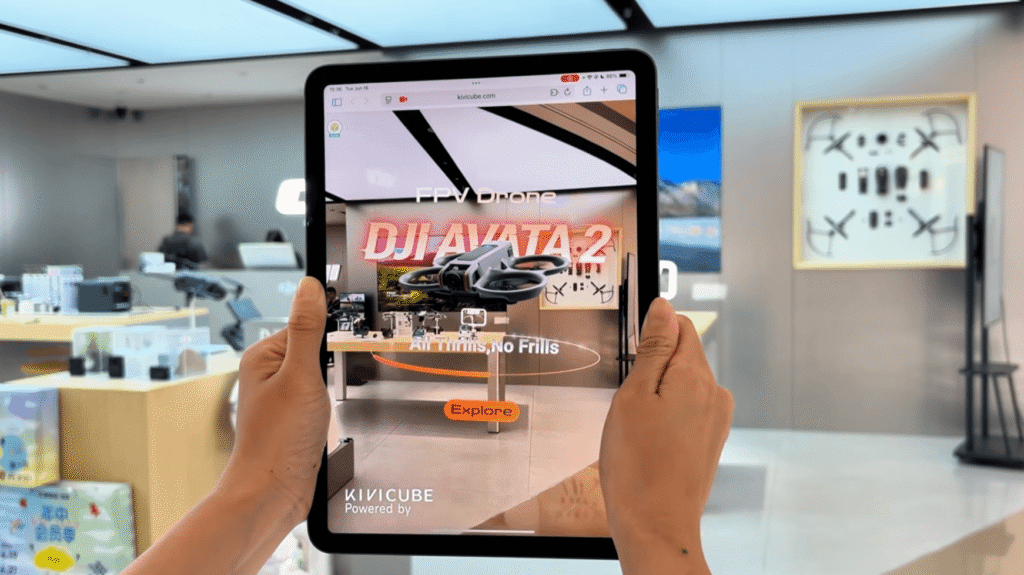
AR turns product demonstrations from passive presentations into hands-on experiences. Instead of just hearing about a product’s features, customers can rotate and zoom interactive 3D models and explore product components to learn how specific functions work.
Sales teams can also use AR to tailor demonstrations to each customer’s needs and answer questions in context. An effective AR marketing strategy therefore helps brands deliver more engaging, memorable demonstrations that improve product understanding and support conversion.
5. Connects Workplace Training With Operational Efficiency
Efficient operations depend on employees having access to accurate information when they need it.
When instructions are unclear or difficult to locate, employees may require additional assistance, repeat tasks, or make avoidable mistakes.
AR can help address certain challenges by displaying relevant instructions within an employee’s working environment.
For example, a maintenance technician could use an AR application to view equipment diagrams, while a warehouse employee might follow visual guidance for completing a specific task.
These applications can be particularly useful in environments where employees need to understand physical processes or work with unfamiliar equipment.
Businesses exploring WebAR for operational improvement should consider the following factors:
- Task complexity: Determine whether visual instructions would make the task easier to understand.
- Employee accessibility: Ensure workers can comfortably access and use the technology.
- Safety requirements: Confirm that digital instructions do not distract employees or interfere with established safety procedures.
- Implementation costs: Evaluate equipment, software, training, and maintenance expenses.
- Performance measurement: Compare task completion times, error rates, and training outcomes before and after implementation.
AR should be introduced where it addresses a genuine operational challenge and offers practical benefits.
5. Improves Workplace Communication and Collaboration
Communication is essential for coordinating teams, explaining procedures, and sharing organizational knowledge.
In businesses with multiple locations or distributed teams, employees may find it difficult to understand complex processes through text-based instructions alone.
Augmented reality can support communication by presenting visual explanations of products, equipment, workspaces, or procedures.
Conclusion
Augmented reality offers businesses new opportunities to improve employee training, support workplace learning, simplify complex instructions, and create more interactive product demonstrations.
Businesses should begin by identifying processes where visual guidance could make a meaningful difference. They can then test suitable solutions, evaluate the results, and expand their use when the benefits justify the investment.
By combining thoughtful technology adoption with effective employee management and continuous improvement, organizations can build more efficient workflows and create better experiences for employees and customers alike.
Frequently Asked Questions
1. Is augmented reality different from virtual reality?
Ans: Unlike what most people think, Augmented reality is actually way different from virtual reality. This is because Augmented reality just enhances the actual reality through compatible devices like smartphones or tablets whereas a virtual reality is a different reality altogether which has no relation to the reality that you’re actually living.
2. How can Augmented reality help in business operations?
Ans: Augmented reality can help in business operations especially in employee onboarding processes by enhancing the systems which are being used for employee training so that the entire experience becomes much more interactive and people actually enjoy learning in the work space which can also help boost the performance rate of a company.
3. What is the difference between traditional training and AR training?
Ans: Traditional training includes systems that have written manuals or instructor-led sessions to help employees understand the workplace duties and policies whereas an AR training uses interactive systems by upgrading the pre existing ones to explain policies and conditions to an employee.