An employee handbook contains knowledge for workers. The guidelines, perks and policies. The organisations often give a digital handbook which can then be referred to both before and throughout employment.
A lengthy PDF file within a shared folder creates issues. Teams often wish to rapidly source details on holidays, home-working, data protection, expenditure and behaviour as well as punctuality.
Many businesses now use digital handbooks instead of printed copies. They are easy to share and update. An employee can access them from different devices.
But what should a good employee handbook contain? How should a company share it?
What Should a Digital Employee Handbook Include?
Every company is distinct. No single format performs similarly for all employee guides. Still, most should cover a few key areas.
Company Overview and Values
Start with a brief introduction to the company. Explain what it does, what it stands for, and its main goals. You can also add a welcome message from the owner or administration team.
This helps new employees get to understand the business and its values.
Workplace Policies and Expectations
Employees need to know the fundamental rules of the workplace. This section can cover working hours, attendance, remote work, dress code, and desired conduct.
It should also explain how employees can report a problem or present a trouble.
Pay, Benefits, and Time Off
Explain how the company operates pay, bonuses, and other benefits. Contain details about paid leave, holidays, sick days, and how to request time off.
Make sure employees know who to contact if they have queries about their pay or benefits.
Health, Safety, and Workplace Rules
Include the main health and safety rules that apply to your workplace. You may also require sections on data protection, equal treatment, and harassment.
Keep these rules transparent. So employees know what is expected of them and where to get support.
Communication and Support
List the people and teams employees need to reach. This could include HR, managers, IT support, or other departments.
Also explain which channels the company uses for updates, inquiries, and daily communication.
How to Create an Employee Handbook Employees Will Read
An employee guide should be easy to use. If it is full of long sections and complex terms, people struggle to locate the information they need.
Use simple language and keep each portion focused on one subject. Add clear headings so employees can scan the document and find answers. Lists and short examples can also help explain rules and guidelines.
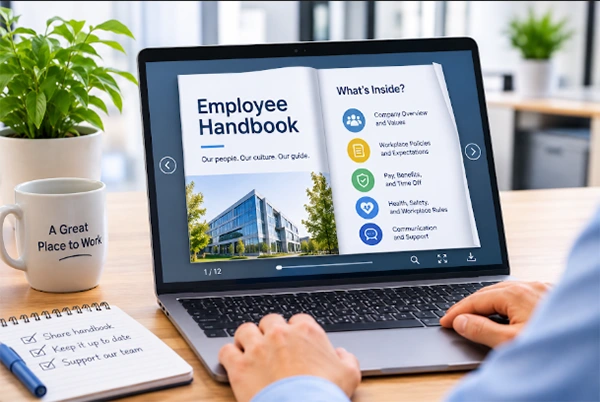
The layout matters, too. A handbook does not need fancy design, but it should be neat and easy to read. Companies can turn their handbook PDFs into a pdf flip book. It gives employees a more interactive way to browse pages. Also follow links and read the document on different devices.
Before sharing it, ask someone to examine the directory. They may spot undefined rules, missing details, or sections that require a better order.
How to Share Your Digital Employee Handbook
Once the handbook is ready, make sure employees know where to find it. There are several ways to share it:
- PDF files: A PDF is simple to construct and transmit by email. Employees can also save a copy to their devices for later use.
- Company intranet or HR software: A shared platform gives the team one place to find the handbook and other work documents. It also allows HR to keep the latest version in one place.
- Email and onboarding packs: Send the handbook to recent hires before their first day or include it in their onboarding materials. This provides them time to read it and organize questions.
- Interactive flipbooks: A flipbook lets employees browse a handbook page by page. Companies can add links to valuable resources, forms, and other records. Employees can unlock it on a computer, tablet, or phone without having to print it.
The best option depends on how the company works. Some businesses may use more than one method. For example, HR can send a link to the handbook by email and keep the same version on the company intranet.
Whatever method you choose, make sure employees can access the handbook when they need it. If it contains private company information, limit access to the right people.
How to Keep Your Employee Handbook Up to Date
A handbook should adapt as the company grows. Workplace rules, benefits, and company procedures adjust over time. Laws and employment rules can alter, too.
Set a routine to review the handbook. HR can check each section and update any details that are no longer correct. It is also worth reviewing the document when the company changes a policy or raises another benefit.
Tell employees when you make changes. Let them understand what has altered and where they can find the latest version. This helps prevent the team from using old information.
You can also ask employees if anything in the handbook is unclear. Their inquiries may show where you need to add more detail or clarify a rule differently.
Common Employee Handbook Mistakes to Avoid
Even a useful handbook can cause problems if the company does not maintain it. Here are a few mistakes to avoid:
- Making it too long: Include what employees need to know, but remove elements that do not belong in the handbook.
- Using complex language: Write in plain English so everyone can understand the laws.
- Leaving out key details: Review that the handbook covers the main guidelines, benefits, and workplace rules.
- Forgetting to update it: Old information confuses employees and leads to errors.
- Making it hard to find: Keep the guide in a place employees can access without asking HR for a copy.
Make Your Employee Handbook Easy to Use
A great employee handbook provides staff with clear answers about the workplace and company guidelines.
It should be easy to read, simple to discover, and kept up to date. Choose a layout that works for your team and make sure everyone understands where to access it.
This way, the handbook can function as a useful reference long after an employee’s first day.
Frequently Asked Questions
1. Should employees sign a digital employee handbook?
Ans: Employers typically ask employees to acknowledge they have read and understood the employee handbook and policy. This should relate to a specific version and ensure compliance with relevant legislation and good practice.
Ans: It should be reviewed periodically and when there are changes in legislation, benefits provision, technology and/or working practice. Although it is good practice to review a handbook annually, more urgent changes can necessitate a review.
Ans: It should be placed on a secure HR, intranet and handbook hosting site. So staff can easily access it. Avoid sending out emails containing handbook attachments, as staff may not view these.
2. How often should a digital employee handbook be updated?
3. Where should a digital employee handbook be stored?