

Have you noticed how sometimes an employee completes his courses, passes the quizzes, and returns to work, but a few weeks later, he is still struggling with the same tasks? Most of the time, the problem is not how much training they receive; it’s whether that training addresses the skills they actually need. That’s why a training plan designed around employee skill gaps can make learning more useful, manageable, and measurable.
What Is a Skill Gap, and Why Does It Matter?
A skill gap is the difference between an employee’s latest abilities and the skills their role requires. It might include using a software tool, communicating with customers, managing projects, or leading a team.
Consider a support representative who manages customer conversations well but finds CRM automation confusing. A general customer service course won’t solve that issue, but targeted practice with CRM workflows might. Identifying gaps helps you focus training on areas where it can improve performance.
How to Create a Training Plan Based on Employee Skill Gaps
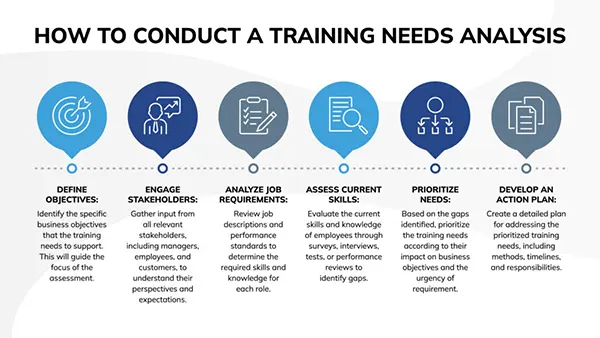
Once you know which skills are missing, another challenge is turning those findings into a practical plan. These six steps will help you do that without worrying your team.
Step 1. Identify and Assess Employee Skill Gaps
Begin with the skills employees need to succeed in their current roles. Review job responsibilities, performance data, and upcoming business requirements, then compare those expectations with what people can do today.
Get input from different sources: manager feedback, employee self-assessments, practical tests, and performance reviews. A simple skills matrix can aid you in organizing proficiency levels and spotting patterns across a team. It can also reveal when multiple employees need support with the same task.
For example, your support representative might navigate the CRM confidently but struggle to build automated workflows. That’s a specific training need you can address, instead of a reason to assign another broad course.
Step 2. Prioritize Skill Gaps Based on Business Needs
Not every gap needs immediate attention. Some prevent employees from doing essential work, while others are more relevant to future responsibilities. Prioritize the ones that most influence productivity, quality, customer experience, or business goals.
If slow ticket management is frustrating customers, improving CRM workflow skills may be more urgent than developing presentation skills. Focus on two or three high-impact skills per person, and save lower-priority areas for a later development cycle. This offers employees room to practice instead of racing through too many topics.
Step 3. Set Clear and Measurable Training Goals
Vague goals like “improve CRM skills” make progress difficult to judge. Use the SMART framework to set objectives that are specific, measurable, achievable, relevant, and time-bound. Employees should know what success looks like before their training begins.
For instance: “Within four weeks, create and test two CRM workflows that automate routine support tasks without critical errors.” That’s easier to act on than “learn automation.” It also offers managers a practical way to evaluate what the employee can do.
Decide how you’ll measure success in advance, whether that’s a finished assignment, a manager observation, fewer errors, or quicker task completion. A quiz score can help, but it shouldn’t be the only measure.
Step 4. Choose the Right Training Methods and Resources
Match the learning method to the skill you’re trying to develop. Short online lessons may work well for product knowledge or technical processes, while coaching, mentoring, and role-playing are usually better for communication or leadership skills.
If you need to develop multiple targeted courses, an AI-powered course creator can help turn existing materials into structured online lessons. This can minimize the time spent building content from scratch.
Whatever format you select, include opportunities to practice the skill. Someone learning CRM automation could watch a short tutorial, design a workflow in a safe test environment, and get feedback before trying it with actual customer data.
Step 5. Build and Implement an Employee Training Plan
Now bring everything together in one training plan. For each skill gap, record the learning objective, activities, resources, person responsible, deadline, and success metric. Keep the plan realistic enough to fit with the employee’s regular work.
Break larger goals into weekly milestones to make progress easier to handle. A four-week CRM training plan might look like this:
- Week 1: Finish introductory lessons on CRM automation.
- Week 2: Practice creating workflows in a test environment.
- Week 3: Apply new skills to supervised support tasks.
- Week 4: Demonstrate independent performance and review results.
An LMS for corporate training can make it easier to assign courses, store resources, and track progress. Pair that with brief manager check-ins to answer questions and eliminate obstacles. Employees are more likely to make progress when they have dedicated learning time and know where to get help.
Step 6. Monitor Training Results and Adjust the Plan
Course completion doesn’t always mean a skill gap has been closed. What matters is whether the employee can use the new skill when it counts. Evaluate progress through practical demonstrations, manager observations, and workplace results.
Return to your actual goal and ask specific questions. Can the employee build workflows independently? Are tickets being managed faster, with fewer errors? These answers tell you more than a completion certificate.
If the gap stays, don’t automatically assign the same course again. Try additional practice, a coaching session, or a different format, and set a new check-in date. Training plans should develop as employees learn.
Conclusion
Effective training begins with knowing what people need to learn, not how many courses you can assign. When you prioritize meaningful skill gaps, set clear goals, and offer time to practice, training becomes more relevant to both employees and the business.
Keep evaluating whether new skills are being applied in everyday work, and adjust the plan when they aren’t. That’s how a training plan becomes a tool for actual development instead of another box to check.
FAQs
1. What methods can be used to identify gaps in employee training?
Ans: Methods that are used to identify gaps in employee training are skill assessments and competency tests.
2. What are the 5 gaps in the gap model?
Ans: The five gaps in the gap model are the knowledge gap, policy gap, delivery gap, communication gap, and customer gap.
3. What are the 5 stages of training?
Ans: The five stages of training are training needs assessment, design and planning, development, implementation, and evaluation and feedback.