Building a Power BI chart is one thing. Knowing how to turn messy business data into a reliable model, choose the right calculations, and present insights that decision-makers can actually use is another. The PL-300 exam is designed to test the latter.
The Microsoft PL-300 certification validates your ability to prepare, model, visualize, and analyze datasets using Power BI. It also assesses whether you can manage and secure assets in practical business scenarios.
So, preparation isn’t limited to memorizing features or executing tutorials. You need to understand how different Power BI capabilities fit together across the complete analytics workflow. Whether you are starting a career in data analytics or validating existing Power BI experience, this guide covers the exam objectives, preparation strategies, common mistakes, and practical steps that can help you prepare effectively.
What Is the Microsoft PL-300 Certification?
Among all the different career paths, this certification targets professionals who use data to help organizations answer business questions and make informed decisions.
A certified Power BI Analyst is responsible for:
- Collecting data from multiple sources
- Cleaning and transforming datasets
- Building models
- Creating interactive reports
- Designing dashboards
- Sharing business insights
- Maintaining secure reporting environments
The certification demonstrates the ability to use Microsoft Power BI effectively in real business scenarios.
Why Should You Earn the PL-300 Certification?
Power BI skills can be valuable across industries because organizations increasingly need employees who can make large volumes of business data understandable and actionable.
The certification:
- Improved employment opportunities
- Increased professional credibility
- Better Power BI skills
- Higher demand in the job market
- Opportunities for career advancement
- Strong foundation for advanced Microsoft certifications
Understanding the PL-300 Exam Objectives
Knowing the official exam objectives helps candidates prepare more efficiently.
Prepare Data
The first stage of data analysis involves collecting and preparing information.
Candidates should understand:
- Connecting to multiple sources
- Importing data
- Cleaning datasets
- Transforming data using Power Query
- Resolving quality issues
Proper preparation ensures accurate reporting later in the process.
Model Data
Data modeling helps organize relationships between datasets.
Important topics include:
- Table relationships
- Star schema design
- Calculated columns
- Measures
- DAX expressions
- Dataset optimization
Well-designed data models improve report performance and accuracy.
Visualize Data
Visualization is one of Power BI’s strongest capabilities.
Candidates should learn how to build:
- Bar charts
- Line charts
- Pie charts
- Maps
- KPI dashboards
- Interactive reports
They should also understand filtering, drill-through features, bookmarks, and report navigation.
Analyze Data
Power BI allows analysts to discover trends and generate valuable business insights.
Candidates should study:
- Trend analysis
- Forecasting
- Statistical summaries
- Data exploration
- Performance analysis
Effective analysis supports better business decisions.
Deploy and Maintain Reports
A useful report must reach the right people, contain current data, and prevent unauthorized users from accessing sensitive information.
Important topics include:
- Power BI Service
- Workspace management
- Dataset refresh
- Security roles
- Report sharing
- Collaboration features
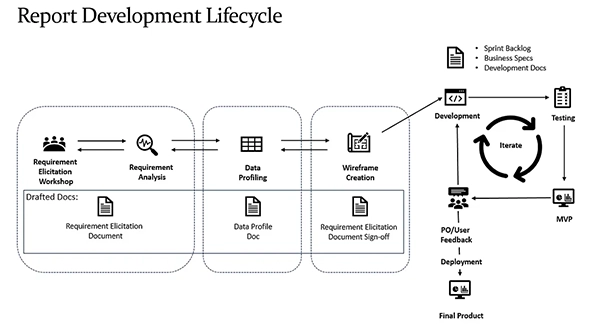
A typical report development lifecycle looks like this:
Creating an Effective Study Plan
Successful preparation begins with a structured study schedule.
Candidates should:
- Review Microsoft’s official skills outline
- Study Power BI fundamentals
- Practice Power Query regularly
- Learn DAX calculations
- Build sample dashboards
- Complete practice assessments
- Review weak areas frequently
Daily study sessions are generally more effective than occasional long study periods.
Gain Hands-On Experience
Practical experience is one of the most important parts of PL-300 preparation.
Candidates should practice:
- Importing Excel files
- Connecting SQL databases
- Cleaning messy datasets
- Building relationships
- Creating calculated measures
- Publishing reports
- Sharing dashboards
Hands-on learning strengthens both technical knowledge and confidence.
Master Power Query and DAX
Power Query and DAX deserve particular attention because they support two fundamentally different parts of the analytics process.
Candidates should become comfortable with:
- Data transformations
- Conditional columns
- Merge and append operations
- Aggregate calculations
- Time intelligence functions
- Filtering expressions
These skills frequently appear in practical exam scenarios.
Common Preparation Mistakes
Many candidates struggle because they make avoidable mistakes.
- Memorizing Rather Than Learning: Understanding Power BI concepts is much more valuable than memorizing answers. The exam evaluates practical decision-making.
- Ignoring Real Projects: Building reports using actual datasets improves understanding far more than reading documentation alone.
- Skipping Data Modeling: Relationships and models are essential components of Power BI. Candidates should dedicate sufficient study time to this area.
- Poor Time Management: Creating a study calendar helps ensure complete coverage of every exam objective.
Candidates preparing for the Microsoft certification can view here to explore additional preparation resources, review important exam topics, and strengthen their understanding before attempting the official PL-300 certification exam.
Career Opportunities After PL-300
The certification supports careers in data analytics and business intelligence.
Common job roles include:
- Power BI Analyst
- Business Intelligence Analyst
- Reporting Specialist
- Data Visualization Consultant
- Business Analyst
- Analytics Developer
As organizations continue investing in data-driven decision-making, certified professionals remain in high demand.
Exam Day Tips
By exam day, your priority should shift from learning new material to applying what you already know accurately and efficiently.
Before taking the PL-300 exam, candidates should:
- Read every question carefully.
- Focus on business requirements.
- Eliminate incorrect options.
- Apply practical knowledge.
- Manage exam time effectively.
- Remain calm throughout the exam.
Scenario-based questions often require choosing the most appropriate business solution rather than simply identifying a feature.
Conclusion
Instead of memorizing Power BI, passing the PL-300 exam is more about learning to think through the complete data-analysis workflow. It’s an excellent credential for professionals who want to build expertise in business intelligence and data analytics. It demonstrates the ability to transform raw datasets into valuable business insights through effective preparation, modeling, visualization, and reporting.
By combining structured learning, hands-on experience, consistent practice, and a thorough understanding of the official exam objectives, candidates can confidently prepare for the PL-300 certification. Earning this credential not only strengthens technical skills but also opens the door to rewarding career opportunities in today’s rapidly growing field of data analytics.
Frequently Asked Questions (FAQs)
1. What is the Microsoft PL-300 certification?
Ans: It validates the skills required to prepare, model, visualize, analyze, and manage business data using Microsoft Power BI.
2. Who should take the PL-300 exam?
Ans: The certification is ideal for business analysts, reporting professionals, and anyone interested in business intelligence.
3. Is the PL-300 exam difficult?
Ans: The exam is moderately challenging because it combines theoretical concepts with practical tasks and business scenarios.
4. How should I prepare for PL-300?
Ans: Candidates should combine official Microsoft learning resources, hands-on Power BI practice, DAX exercises, Power Query training, and regular practice assessments.
5. Is practical experience necessary?
Ans: Yes. Practical experience greatly improves understanding and prepares candidates for real-world analytical scenarios.
6. Can beginners earn the PL-300 certification?
Ans: Yes. Beginners who follow a structured study plan and practice regularly can successfully prepare for and pass the exam.