Every business can face different levels of operational risk, and it is often truly hard and mostly impossible to predict this. Even when processes and plans are clearly defined, employees still need to be trained and made aware of how to act when anything goes wrong.
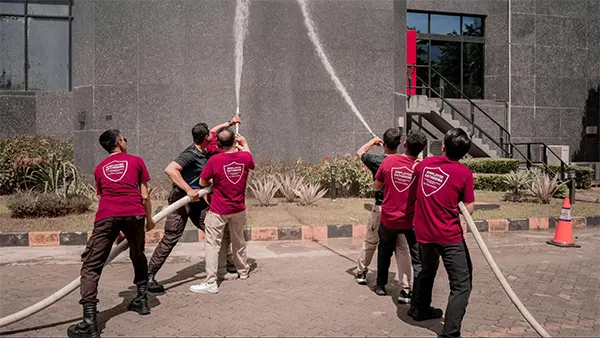
Realistic, hands-on training plays a central role in reducing operational risk. Instead of simply reading manuals, one can come to ground, build skills and learn from mistakes.
Keep reading to learn why realistic training reduces operational risk.
Understanding Human Error
Mistakes are inevitable. But in a business context, human error is rarely arising from insufficient knowledge or a lack of care. More often, it stems from systemic issues: inadequate preparation, high-stress environments, misidentifying processes, or a simple lack of practice. Viewing error as a training gap rather than a personal failing is the first step toward developing a more resilient operation. Effective human risk reduction strategies focus on prepping employees for the complex realities of their jobs, not just the ideal cases outlined in a manual.
When an employee has only read about a danger protocol, their response in a real emergency will be delayed and uncertain. They are forced to recall records under duress, a notoriously unreliable process. Training that reflects the potential for error and provides a safe space to make and learn from mistakes is key to preventing them when the stakes are high.
The Value of Real-World Scenarios
Theoretical speculation has its place, but it cannot duplicate the pressure and complexity of a real-world event. This is why hands-on, scenario-based training is so helpful. It bridges the gap between knowing what to do and actually being able to do it. By presenting real-life challenges, you allow your team to build mental muscle memory and practice basic thinking in a controlled environment where the effects of failure are zero.
In high-stakes industries, this approach is obligatory. For example, cabin crews rely on realistic aviation training simulators to practice everything from in-flight medical accidents to full-scale evacuation procedures. These training tools mimic the exact environment of an aircraft, allowing staff to perform their duties under simulated stressful circumstances. This kind of immersive practice ensures that when a real incident takes place, the crew’s response is swift, unified, and effective, dramatically reducing risk to passengers and staff. The same rule applies across all sectors, from cybersecurity teams running breach experiments to retail staff role-playing difficult customer meetings.
Building Competence and Confidence
One of the most notable outcomes of realistic training is the boost in employee confidence. When team members have successfully resolved a challenging case multiple times in a simulation, they develop a belief in their own ability to address it in reality. This confidence is not just a feeling; it’s a critical ability enhancer. A confident job candidate is less likely to freeze under stressful circumstances and more likely to take decisive, correct action.
This process builds true skills. Repetition in a realistic setting helps transfer procedures into long-term memory, freeing up our brain resources to focus on problem-solving and adapting to unexpected variables. An employee who has studied a complex task dozens of times is not just following a script; they are using a well-honed skill. This deep level of understanding is what turns a good team into a great one, capable of performing with accuracy under any circumstances.
Preventing Incidents with Preparedness
Effective training is mostly about proactive prevention. By identifying potential failure points in a simulated environment, organizations can adjust their processes and close training loops before they lead to a real-world incident. A broad operational risk management framework always includes robust training as a crucial control measure. It’s the most direct way to mentally prepare your team for what might go amiss.
Think of it as a stress test for your people and your method of operation. A simulation might reveal that a communication protocol is ambiguous or that a team lacks a specific technical skill. Discovering this during a training drill allows you to fix the problem at minimal cost. Discovering it during a live incident can have unforeseen financial, reputational, or safety implications. Preparedness through training turns your team from being reactive to proactive guardians of operational stability.
Creating a Safety Culture
Ultimately, a commitment to viable training does more than just build skills; it helps shape the entire organizational culture. When a company invests crucial resources into high-fidelity training, it sends a positive message to every employee: your safety and accuracy are top priorities. This fosters a strong safety culture where workers feel valued and empowered.
In such a culture, employees are more likely to take charge of safety protocols, report potential hazards without fear of blame, and actively get involved in continuous improvement. The training itself becomes a common experience that demonstrates team cohesion and a collective commitment to excellence. This cultural update is perhaps the most profound benefit of all, as it creates a self-reinforcing cycle of safety, ability, and operational resilience that protects the entire business from the base up.
Conclusion
In the end, realistic training serves as a great way to teach much more than knowledge. It provides them a chance to practice what they should actually do when something stressful or unexpected happens.
With the help of realistic scenarios, businesses can come across small barriers such as communication, skills and other weaknesses that hinder achieving success during emergencies.
This way, the benefits go beyond specific performance and help to protect people while keeping operations moving.
FAQs
1. How does realistic training reduce operational risk?
Ans: It helps employees ro practice real situations before they actually face an emergency on the ground.
2. Will more training help prevent human errors?
Ans: No. But it definitely reduces the chance of human error, poor communication, and confusion at the time of an emergency.
3. What types of businesses can benefit from scenario-based training?
Ans: Almost every industry can take advantage of it, from aviation to healthcare to cybersecurity and customer service.