When offices ran five days a week, the mailroom worked on a usual assumption: if a package arrived for someone, they would be at their desk to collect it. Hybrid schedules quietly removed that assumption. Now a delivery can be received on Monday for an employee who is not back until Thursday, and by then it has been moved, stacked, or forgotten.
Facilities teams handling this are increasingly turning to centralized mailroom management software to restore order to a process that was never curated for a flexible workforce. The issue is not that people order more. The office no longer knows who will be in the building on any given day.
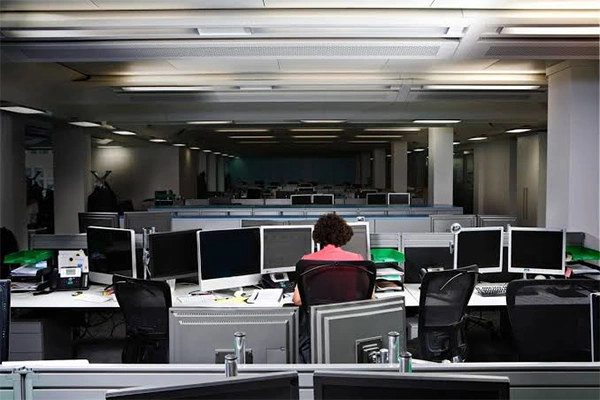
The Old Mailroom Model Assumed Full Attendance
Traditional office mail and employee management relied on proximity. Mail was sorted into pigeonholes, parcels were walked to desks, and anything unclaimed was obvious because the recipient sat twenty feet away. Informal processes worked because the exact people were present every day.
Hybrid work removed that safety net. Desks are now shared or booked, teams rotate their office days, and a growing digit of employees have no fixed seat at all. A parcel addressed to a person no longer has a designated destination.
Where Things Break Down
Facilities managers describe the identical pattern across very different organizations.
| Before Hybrid Work | After Hybrid Work |
| Parcels delivered to fixed desks | No fixed desk to deliver to |
| Recipients collect within hours | Items wait days for the next office visit |
| Unclaimed items easy to spot | Packages blend into growing storage piles |
| Reception knows most employees by sight | Rotating staff and new hires are harder to identify |
| Low risk of collection by the wrong person | Colleagues collect “on behalf of” others with no record |
Each of these shifts is small, but together they turn a routine task into a daily source of friction.
Hybrid work did not bring more mail. It created more distance between the mail and the people it belongs to.
The Hidden Workload on Facilities Teams
The extra effort barely appears in any report. Reception staff answer messages asking whether something has arrived. Office coordinators search storage rooms for items that were moved to make space. Facilities managers field issues about lost equipment that turns out a well-meaning colleague collected.
These work add up to hours each week, spread across people whose roles were never meant to include package detective work. Because the time is fragmented, it is easy to underestimate and hard to justify fixing until someone verifies it.
Logging Every Item at the Point of Arrival
The most impactful change facilities teams make is also the simplest: log every inbound item the moment it enters the building. Staff scans the courier label, the system matches it to the employee directory, and finds the storage location.
That single step solves many hybrid-specific problems at once. The employee is notified immediately, even if they are working from home, so they know to collect it on their next office day. Facilities can see every item currently waiting, how long it has been there, and to whom it belongs.
Notifications That Respect Flexible Schedules
Notifications matter more in a hybrid office than in a traditional one. A worker who learns their package has arrived can plan to collect it, request that it be held, or ask a named colleague to receive it on their behalf.
Many teams also set automatic reminders for items left unreceived after a set number of days. This keeps storage from filling up and gives facilities a clear trigger for following up, rather than relying on someone watching an old box on a shelf.
The goal is not to make employees come in for their packages. It is to ensure their packages are waiting safely when they do.
Accountability When Someone Else Collects
Collecting parcels for colleagues is common and generally helpful, but it is also where many items go missing. Without a record, nobody can say who took a package or where it went next.
Modern systems manage this by recording proof of collection, such as a signature, photo, or the name of the person who collected it. If an item is picked up by a colleague, that handoff is logged too. Disputes that once consumed days of asking around can be settled by checking the record.
Using Data to Plan Space and Staffing
One unexpected benefit of tracking deliveries is the information it produces. Facilities teams can see which days bring the most packages, which departments receive the most items, and how long parcels usually wait before collection.
That data feeds directly into decisions hybrid offices are already making. It helps teams plan reception coverage on busy days, size storage areas correctly when consuming office space, and decide whether parcel lockers would be worth the investment.
Setting a Clear Mailroom Policy
Technology works better alongside a simple, communicated policy. The most successful facilities teams set clear rules on a few points: whether personal deliveries are allowed, how long items will be held before being returned, and how employees can impersonate someone else to collect for them.
When these rules are written down and supported by the system, staff stop making judgment calls on the spot, and employees know specifically what to expect.
Designing Mail Handling for the Way People Work Now
Hybrid work is not a temporary phase for most organizations, and the mailroom has to reflect that. The old model depended on people being present, while the new one depends on reliable information. Facilities teams that log every arrival, tell employees wherever they are, and record every handoff aren’t just clearing a backlog. They are building a process that works regardless of who is at the workplace on any given day.
FAQs
1. Why has hybrid work made office mailrooms more difficult to manage?
Ans: Hybrid work means employees are no longer in the office every day, so packages often sit uncollected, get moved, or become difficult to track.
2. What is centralized mailroom management software?
Ans: It is a system that logs incoming deliveries, matches them to employees, records storage locations, sends notifications, and tracks collections.
3. How do delivery notifications help hybrid employees?
Ans: Notifications let hybrid employees know when a package arrives, allowing them to collect it on their next office day or authorize a colleague to pick it up.