Life is extremely unpredictable, and you never know what it throws at you at the most random moments. One day, you’re working hard, and the other day, you immediately have to call off due to personal issues or family emergencies. However, what really matters is how you maintain professionalism while dealing with your situation. Your reasons to call out of work should ideally clear three bars: credibility, communication, and urgency.
This article elaborates on some of the good reasons to call out of work, such as bereavement, sickness, family emergencies, jury duties, last-minute medical appointments, and more.
Top 10 Reasons to Call Out of Work
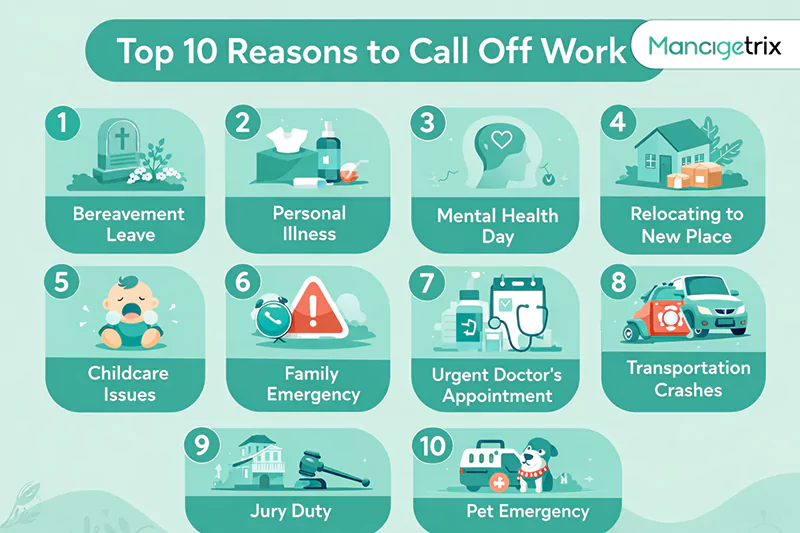
The most effective and believable reasons to call out of work include the loss of a loved one, family emergencies, a mental health break due to burnout, urgent doctor’s appointment, personal illness, jury duties and more. However, what matters the most is your communication and how you deal with the situation while maintaining professionalism.
Here are some of the best reasons to call out of work:
1. Bereavement Leave
The loss of a loved one can create heavy emotional turmoil in an employee, impacting their productivity at work. Bereavement Leave allows employees an emotional space to process their grief and manage the logistical arrangements for the funeral. Most of the companies offer 3-7 days of bereavement leave at the loss of immediate family members like parents, spouse, siblings, children, and grandparents.
In such a scenario, refer to the companies’ policies around bereavement leave and the paperwork required. Let your HR or manager know about the situation as soon as possible, and inform them about why you need time off.
2. Personal Illness
Being sick can hamper productivity at the job. If your sickness is preventing you from being fully dedicated to work, then it’s better to take a day off. Personal illness can be one of the good reasons to call out of work if:
- If you have a serious cold, cough, or the flu, and are at risk of spreading the disease.
- Critical health conditions that require immediate attention and care.
- Severe migraine when lights, screens, and concentration are impossible to manage.
- Any ongoing chronic condition that has flared up.
Inform your manager beforehand, and be ready with the medical papers or doctor’s prescription, in case someone asks you to present them. The Family and Medical Leave Act (FMLA) provides up to 12 workweeks of leave in case of serious health conditions for eligible employees in 12 months.
3. Mental Health and Burnout
Burnout, stress, anxiety, and lack of motivation are the signs that you need to call off work. A physically and mentally troubled body produces the work that reflects it. So, if you’re feeling exhausted, burnt out, or overwhelmed, then you must step back and rejuvenate your mental health in ways that help you.
Most of the workplaces now understand the need for a mental break and design policies that allow a mental health break to employees. Communicate clearly to your HR or manager about why you need a day off.
4. Relocating to a New Place
Moving homes is a big decision and a significant life event, and is one of the good reasons to call out of work. Packing, dealing with movers, logistics, and settling is a daunting task that requires full attention. Although it should be done outside work hours and mostly on weekends, it sometimes becomes an emergency when you’re relocating due to unexpected events. You can minimize the disruptions that can happen due to your absence by informing your manager clearly
5. Childcare Falling Apart
Proper childcare is often neglected in the case of working parents. Unexpected events like a sudden school day off or a sick child can disrupt your routine, and the child may need immediate attention. Nanny calling out and daycare closures can affect working parents.
These last-minute issues are unpredictable and genuine. Let your manager know about your situation, work remotely if the company allows or take full accountability for arranging a backup plan.
6. Family Emergency
Unexpected illness, accidents, and injuries can happen anytime, and in most cases, it requires immediate action. During a critical situation that involves a family member, an employee must notify their manager or HR about the situation and the expected time of return.
Here are some family emergencies that allow employees to call off work:
- A family member requiring urgent hospitalization or a surgical operation.
- A close relative was caught up in an accident.
- A serious injury that requires immediate attention and care.
- Someone is dealing with mental health issues and requires you for immediate support.
7. Urgent Doctor’s Appointment
Although a prior notice can be given to your manager regarding your medical appointments, in some rare cases, urgent medical appointments may catch you all of a sudden, and you may need to call off work urgently.
Explain the situation to the upper management and the medical repercussions that can happen if the situation is not addressed properly. You are not required to provide detailed medical information, but be present with your doctor’s note in case someone demands. Mention your estimated date of return and how you’ll manage the workload.
8. Transportation Issues or an Ongoing Strike
A transportation crash or an ongoing strike is one of the best reasons to call out of work on short notice. If you’re relying on public transport, then unexpected delays and cancellations can occur, which may require you to call off. Although you should plan, these reasons can be unavoidable. What matters the most is how you communicate this to your manager or HR.
Alternatively, if your company allows a remote work option, then offer to work remotely and complete the tasks from home to ensure a smooth workflow and lessen the impact of your absence.
9. Jury Duty
Employers generally must allow employees a day off for jury duty. However, you must inform your manager as soon as you receive the summons and provide the necessary documentation if necessary.
According to the US Department of Commerce, it is required by federal law that employees should be given time off for jury duty; however, whether it is paid or unpaid depends entirely on the state laws.
10. Pet Emergency
A pet emergency is one of the acceptable reasons to call off work. Most of the employers understand that pets are a part of the family, and they do need medical attention. No matter if it’s an urgent vet visit or your pet is suffering from severe illness, it can be distressing. Communicate your reason clearly to your manager and assure them of your early return.
Best Last-Minute Reasons to Call Out Of Work
Life is unpredictable, and hence you can’t plan for what’s going to happen next. Last-minute urgencies may likely strike you at odd hours, leaving you confused and stranded.
Here are some reasons to call out of work in less than 24 hours:
- Health Emergencies or Accidents: Your immediate family member is likely sick and requires immediate attention and care, or someone has met with an accident or an injury. In such a scenario, calling off at the last minute is valid.
- Weather: Commuting in severe weather can be dangerous. Unexpected snowstorms, tornadoes, and hurricanes can put your life at risk. If the weather forecast predicts dangerous weather, it becomes one of the good reasons to call off work on short notice.
- Home Emergencies: Severe electrical issues, gas leak, broken door or a window, flooding, or a leakage due to the burst pipe, anything can be unexpected. These situations require the immediate presence of the contractors, and hence, it can be one of the excuses to call off work.
However, it should be kept in mind that these reasons should not be overused. It is important to know when to actually call out and establish a healthy work-life balance.
How to Call Out Of Work Professionally?
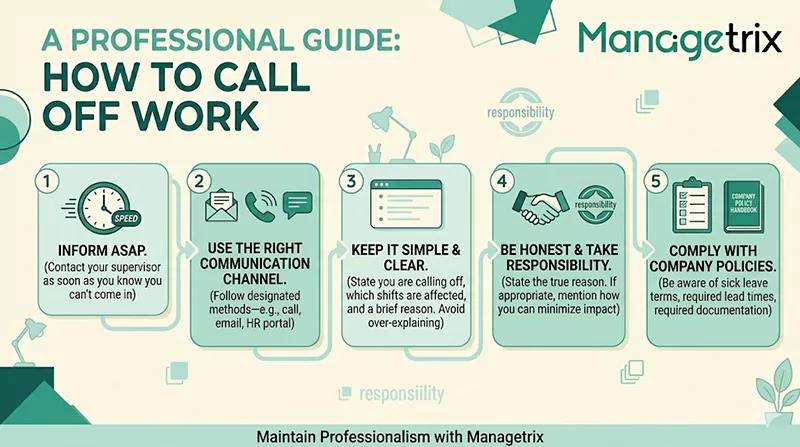
Maintaining a sense of professionalism and being transparent about your situation goes a long way. You should alert your manager as soon as possible, be respectful, follow the proper communication channels, take accountability for your work, comply with the company’s policies, be honest and reassure the management of your timely return.
Here’s how you can maintain professionalism when calling off work:
1. Inform as Early as Possible
It is important to inform your manager as soon as possible that you won’t be able to work. The earlier you notify, the easier it becomes for the manager to adjust the schedule, manage the workload, and delegate the work to ensure a smooth workflow.
For example, instead of letting them know right before the shift begins, you can inform them at any hour the emergency strikes, and later follow up during the working hours.
2. Using the Right Communication Channels
Follow your company’s preferred method of communication: email, instant messenger, or a phone call.
- Use phone calls for the immediate and urgent notification to the manager.
- Emails work best in a formal workspace, where records matter. You can write a leave letter if your situation is non-urgent.
- Instant messaging is suitable for a quick day-to-day update or can be used when you’re running late.
3. Keep the Communication Clear and Simple
The way you communicate your reason to call off work is equally important as the reason itself. Calling a day off work does not require a long explanation of your urgency. Be simple and clear with your reason and explain in short. You can simply state:
- Brief reason about what you’re calling off.
- Your expected date of return.
For example, if you’re sick, you can simply state, “Hello, I’m not feeling well today and won’t be able to come in. I’ll keep you updated”.
4. Be Honest and Show Responsibility
It is important to be honest while calling off work and taking full accountability. Stay honest and clear with your reason. If you want a day off to rest, you can simply call in a sick day. Avoid giving over-explanations as it sounds dramatic and unprofessional.
At the same time, take accountability for your work. You can discuss with them about your expected date of return, pending tasks, and reassure them that you will be available if something needs urgent attention. By laying a handoff, it automatically implies that you’re also thinking about the team, and not your own situation.
5. Compliance with the Company’s Policy
Some companies may require feeding leave in a system, marking your absence in the attendance sheet, or submitting a medical note if you’ve called in sick. Comply with the company’s policies without any resistance because conflicts in the workplace can be daunting.
Suggested Reading: 12 Good Reasons for Leaving a Job
What NOT to Say When Calling Off Work?
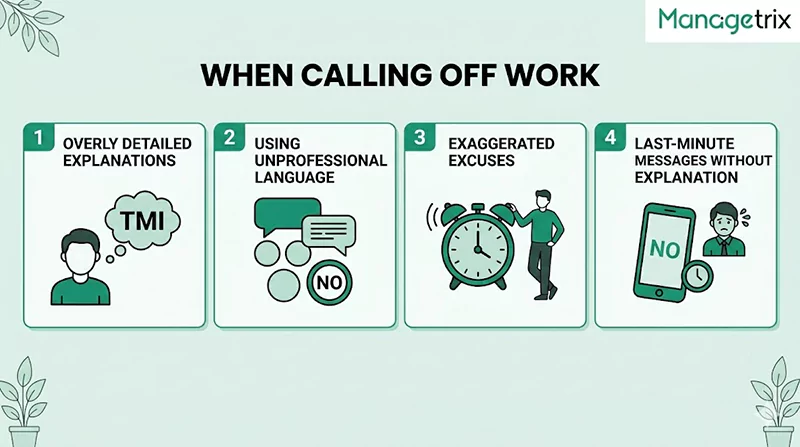
Be mindful of your explanations, avoid overly detailed stories, fake and exaggerated excuses, unprofessional language, and last-minute texts with no explanation. These minor details ruin your reputation at work and sound dismissive of your responsibilities.
Here’s everything you should not do when calling off work:
1. Overly-Detailed Explanations
Beating around the bush looks unprofessional. Although a lot of people assume that giving every possible detail about their absence may sound credible and convincing, it is actually the opposite. Your HR or manager do not require a long explanation about your symptoms and personal issues. A medical note, if you’re calling in sick, will suffice.
For example, instead of saying, “I have 102 degrees fever, and I’ve been having migraines for the past two days”, you can simply state, “I’m not feeling well today and won’t be able to join in”.
It keeps the communication clear and professional boundaries intact.
2. Using Unprofessional Language and Slangs
Not using corporate language may sound unprofessional, and it becomes less likely for people to take you seriously. Instead of saying, “Not feeling it today” or “I won’t show up”, you can say, “I’m dealing with the childcare issues and won’t be able to come in. I’ll be available if anything urgent comes up.”
The latter statement sounds convincing and professional, while the former statement sounds dismissive and reflects that you’re not serious about your responsibilities.
3. Fake and Exaggerated Excuses
Exaggerated and fake excuses can be harmful to your professional career. Although it is quite understandable that you want to take a rest, calling out of work by giving fake excuses about your health can land you in trouble. If the HR or manager requires a medical note, then you might get stuck with the situation, arousing suspicion, which can damage your reputation.
Instead, be honest and clear with your situation. It protects your privacy and allows space to deal with the situation.
4. Last-Minute Messages Without Explanation
Although last-minute emergencies are unavoidable, no explanations and vague last-minute texts can arouse suspicion. Rather than simply stating that “I’m just tired,” which does not reflect your condition, you can frame it as taking a mental health day or a burnout issue, which is more likely to be dealt with seriously.
However, do not feel obliged to explain your medical symptoms or personal issues in detail; keep it crisp and to the point.
Suggested Readings: Leave & Holiday Management System | Managetrix HR Software
How Often Is It Okay to Call Off Work?
Although there’s no certain number of times you can call off work, frequent absence from work can raise eyebrows. In most workplaces, a leave of more than 7-10 days can be concerning, which may require HR or a manager to investigate the matter. Calling in sick frequently or calling out frequently within the first 4 months of joining is generally viewed negatively by the managers.
Here are some factors that matter when calling off work:
- The company’s policies on leave.
- Frequency of absence
- Your overall performance in the company.
Ensure that you avoid:
- Taking clustered leaves around weekends, public holidays or high-pressure deadlines.
- After a performance review
- The next day after the team meeting, company event or a gathering.
Important Tip: Avoid using the same excuse time and again within a short period of time. It becomes a pattern for HR or managers to track.
Wrapping Up!
To sum up, the way you communicate and deliver your reasons to call out of work matters equally as the reason itself. It is important not to feel guilty about taking a day off; mental and physical health, work-life balance, and childcare issues need to be taken care of in order to be productive at work.
By being upfront about your situation, explaining in brief, and adhering to the company’s policies, you can manage both personal and professional space. Make sure that you’re using good excuses to call off work and be transparent, clear, and respectful because employers appreciate honesty.
Frequently Asked Questions (FAQs)
1. Do I need a doctor’s prescription when I call out of work due to being sick?
Ans: A doctor’s note is not always mandatory, and it also depends on the duration of your leave. A shorter leave, like a 1 or 2-day leave, does not require a medical history and documents. However, in case you’re taking an extended absence of 3-4 days or a certain number of leaves during a month, then employers may require a doctor’s note. Comply with the instructions without resistance and be present with your prescriptions and medical documents.
2. Is it okay to call out of work?
Ans: Yes, it is completely normal to call out of work. However, it is important to have clear communication with your manager or HR and not make it a repetitive pattern. Call out of work when you genuinely require a day off and handle the situation in a way that does not harm your reputation.
3. What are some of the best excuses to call off work?
Ans: Physical sickness, mental health concerns, childcare issues, and family emergencies are some reasons to call off work. However, it is important to be clear about your situation and communicate as early as possible, along with the responsibility to comply with anything urgent.
4. Can I call out of work for a mental health day?
Ans: Yes, most of the modern companies now understand the mental stress, anxiety, and burnout that can happen due to workload. Communicate clearly with your manager about your situation, and if your workplace openly promotes mental health and work-life balance, then being upfront about it can strengthen your trust and establish a better relationship with your manager.
5. What are some of the good reasons to call out of work on short notice?
Ans: Severe weather, home emergencies, health emergencies, or unfortunate accidents are valid and good reasons to call out of work at the last minute.