Just 8% of companies say they’re fully compliant with international tax and labor rules, according to Multiplier’s 2026 Global Hiring Gap report.
If you are a small business, you might have experienced how difficult it is sometimes to keep everything organized when you make your first hire abroad. Any ignorance can lead to missed payroll filings, badly drafted contracts, or a surprise tax bill. That’s why the first five hires often set the template: who legally employs people, how they get paid, and how much admin lands on a founder’s desk.
Many companies find it difficult to choose. You can rent compliance through an Employer of Record (EOR), or you can open your own local entity. Each shapes the cost, speed, and control of your global team in a very different way.
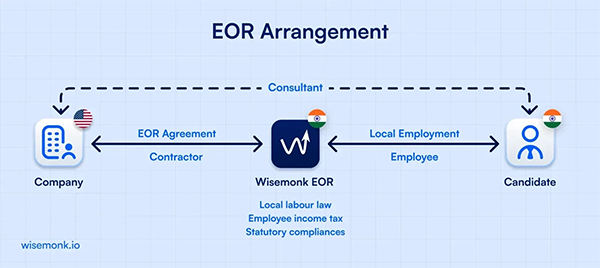
What an Employer of Record Handles
An Employer of Record is a company that actually has a legal entity in the country where you want to hire. It becomes the official employer on paper, while your team does the day-to-day work. In practice, an EOR often takes care of:
- Locally compliant employment contracts
- Payroll, income tax withholding and social security contributions
- Mandatory benefits, leave and statutory insurance
- Onboarding paperwork and, in some cases, terminations
Pricing has become more feasible for small teams. Newer providers such as Columbus list EOR plans from $179 per employee per month, while Deel’s published EOR rate starts at $599. That fee sits on top of salary and employer costs, so it can add up as you grow.
If you compare more EOR providers, it helps to check which ones own their entities and which rely on partners.
What Running Your Own Entity Involves
Opening a subsidiary or branch can result in making your company the direct employer. You register the business, open a local bank account, sign up for tax and social security numbers, and employ a payroll provider. In Germany, for instance, a GmbH needs a minimum share capital of €25,000, and someone has to check the filings and annual accounts from day one.
The ongoing work usually surprises first-timers more than the setup:
- Monthly payroll runs and statutory reports
- Annual financial statements and corporate tax returns
- Employment law updates, data protection rules and, in some countries, works councils
- A registered address and, sometimes, a resident director
All of it requires someone keeping an eye on local compliance, in-house or through advisers. The upside is complete control over contracts, benefits, equity plans and culture, with no middle layer between you and your people.
Comparing Costs for One to Five Hires
At small headcounts, the numbers often lean toward an EOR. Five employees on a $599 monthly plan come to roughly $36,000 a year in fees. On a $179 plan, the same team costs around $10,700. An entity offers legal setup, accountants, payroll software, possible audits, and the hours your finance lead spends on all of it. In many European countries, those costs can match or pass EOR fees before you add a single person.
Before deciding, it helps to list:
- One-time setup fees and capital needs
- Monthly payroll and accounting services
- Legal review of contracts and handbooks
- Exit costs if the market doesn’t work out
That last item gets ignored. Closing an entity can take months of legal and accounting work, while ending an EOR arrangement often means giving the provider notice and handling the exit under local rules.
Speed When Your Candidate Is Ready Now
Timing usually decides the first hire. A great candidate in Lisbon or Bogotá might accept your offer this week, while setting up an entity can take weeks or months, based on the country and registration queues. An EOR with local infrastructure can usually get someone started within a few days.
Speed also offers you room to test a market. If the first hire in a new country works out, you can add more. If it doesn’t, you can tackle things down without dissolving a company. For startups still searching for product-market fit, that flexibility can be worth more than the long-term savings of an entity.
One catch, though. Fast onboarding can make it tempting to distribute hires across many countries without a plan, and each one comes with its own rules on notice periods, leave, and termination.
Where an EOR Can Fall Short
An EOR includes a lot, but some situations push against its limits. Germany is the classic example. Law firm Orrick explains that German law treats EOR arrangements as employee leasing, so the provider needs a license and the same worker can actually be leased to one client for up to 18 months. After that, companies usually move the person to their own entity.
Other friction points can appear:
- Permanent establishment risk if an employee signs contracts or brings in revenue on your behalf
- Stock option plans that don’t fit neatly with a third-party employer
- Intellectual property ownership, which requires careful contract wording
- Senior candidates who would instead sign with the company they work for
None of these rule out an EOR for early hires. They simply mean some countries and roles need a closer legal look before you sign.
Country Count Matters as Much as Headcount
Five hires in one country and five hires in five countries are very different conditions. With the first, an entity can begin to make sense fairly soon, since the fixed costs get shared. With the second, you’d need five separate entities, each with its own accountant, bank account, and filing calendar.
Teams tend to spread out faster than planned. The Global Atlas Report 2026 from Atlas HXM found that 52% of organizations plan to expand their international presence within 18 months. If your roadmap looks similar, an EOR can keep things manageable while you see where talent clusters.
So where are your next five hires most likely to sit? An easy sheet with roles, target countries, and start dates can make the answer clearer, and it usually points to one or two countries where an entity might pay off later.
How GitLab Mixes Both Models
GitLab, the all-remote software company, shows how a hybrid setup can function. Its public handbook lists company-owned entities in places such as Australia and Germany, while team members in countries such as Switzerland, Sweden, and Mexico are employed through partners like Remote.com and Global Expansion. It also runs a formal country conversion process for shifting a location from a partner to its own entity.
A few takeaways for smaller teams:
- Treat an EOR as a beginning point with a clear review date
- Track headcount and spend per country, so switching rests on actual data
- Plan transitions early, since a move to a new legal employer means a fresh employment contract and careful communication
You don’t need GitLab’s size to copy this. Even with three or four people abroad, a short written rule on when to revisit each country can avoid rushed decisions.
Signals That an Entity Might Be Worth It
No single headcount makes an entity the right call, but a few signals tend to show up together:
- You expect stable growth in one country, often beyond five or so employees
- Your hires will sell, sign deals, or offer local customers directly
- Local rules, for example Germany’s leasing cap, restrict long-term EOR use
- You want equity plans or benefits beyond what your provider supports
- You plan to open an office or invoice local clients
How many of these apply to your team today? If two or three ring true, it can be worth receiving quotes from a local accountant and employment lawyer. Analyze that figure with your expected EOR fees over the next two to three years, and include the cost of switching your existing employees over. That transfer requires careful timing, since contracts, benefits, and payroll move together.
Let Each Country Earn Its Own Entity
For most companies making their first five hires abroad, an EOR can be the practical beginning point. It gets people onboarded quickly, puts local employment admin in specialist hands, and avoids locking you into a market before you know it works. An entity tends to pay off later, once a country proves itself with steady headcount, local revenue, or rules that limit EOR use.
A mixed approach usually works best. Use an EOR to enter new countries, keep a running tally of cost and headcount in each, and set a review point, for example, every six months. When one country turns into a hub, you can price out an entity and plan a calm transition for the people already there.
Your first employees abroad will remember how smooth their beginning felt, and a setup that fits your stage can make it a better one.
FAQs
1. What is the best employer of record?
Ans: The best employer of record often depends on budget, company size, and countries where hiring is going to happen.
2. How does GitLab work?
Ans: GitLab, the all-remote software company, shows how a hybrid setup can function. Its public handbook lists company-owned entities in places for example, Australia and Germany, while team members in countries such as Switzerland, Sweden, and Mexico are employed through partners like Remote.com and Global Expansion.
3. What is an employer of record?
Ans: An Employer of Record is a company that generally has a legal entity in the country where you want to hire. It becomes the official employer on paper, while your team does the day-to-day work